Sunday, September 17, 2006

Life's a crock

I've discovered the magical, wondrous world of crockpots.

One of my new San Diego friends is a connoisseur of crockpotting. He makes everything in his: meatloaf, stew, soup, pork chops, baked beans. After hearing about his food exploits I had to try it myself. So I bought the biggest crockpot I could find at my neighborhood BigLots and started experimenting.

My first attempt, at meatloaf, was less than successful. I readjusted the temperature mid-way through the cooking process and forgot to restart the pot. Six hours later I arrived home with much anticipation only to find a room-temperature, half-cooked, two-pound mound of ground beef well on its way to spoilage.

Happily, I quickly figured out my mistake and the meals I've attempted since have all been successful.

One of the things I love most about crockpot cooking is that it closely mimics the cooking style that I learned from my Maw Maw (grandmother in Cajun speak). Practically everything is cooked in a single pot at a low temperature for a good while - usually the longer the better - until fat is rendered from meat, flesh peals easily from bone, vegetables break apart and blend in with gravy, and flavors mix and fuse into new ones.
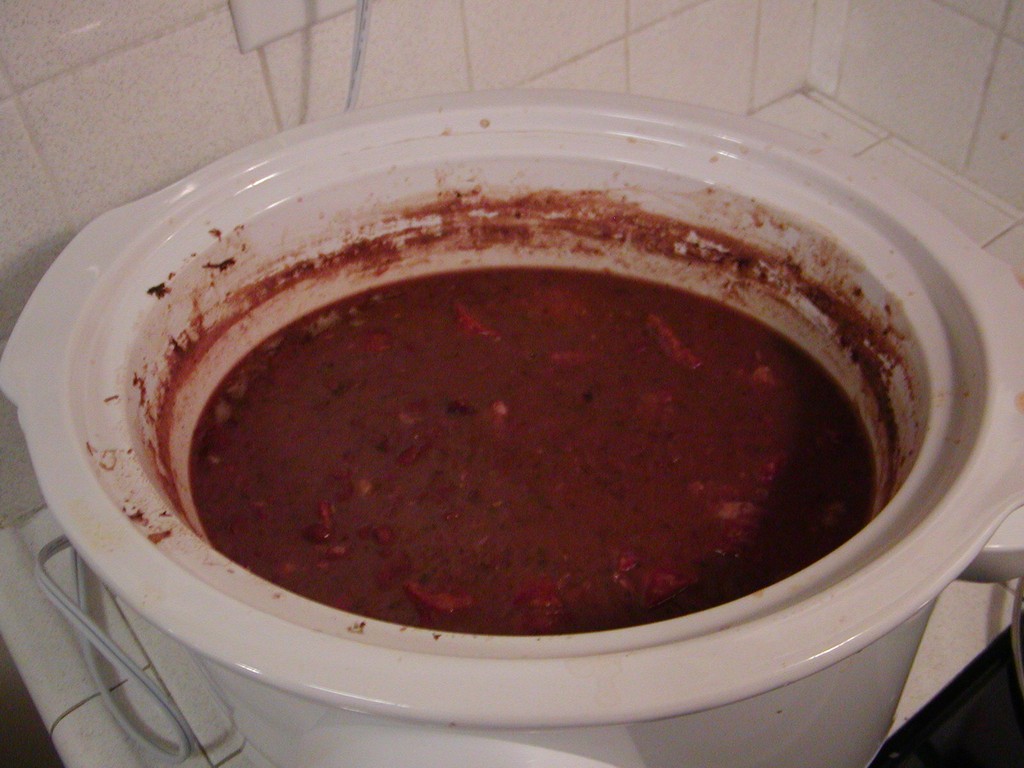
My latest crockpot meal is traditional New Orleans red beans (shown in pictures that can be made larger by clicking on them).

Here's how I did it:

Ingredients
- One 1 pound bag of red kidney beans (Camilla if you can find the brand) soaked in water overnight
- One large onion, finely chopped
- Three stalks of celery, finely chopped
- Seasoning ham (I usually use a good sized ham hock)
- Two minced garlic cloves
- One bay leaf
- One cup of chicken stock

What to do
- Throw everything into the crockpot and fill with water until the liquid clears the bean mixture by about an inch and a half. Cover with the lid, set the temperature on high and cook for 10 hours. Then go do something fun and productive with your day.
- When you get home, 10 hours later, uncover, stir and mash those beans real good, but make sure you leave the mixture lumpy
- Continue cooking with the lid off and stir periodically until the beans reach a medium thickness.
- Season with cayenne pepper, salt and hot sauce.

If you've had red beans before you know they're usually served on rice with grilled sausage or fried chicken on the side. Ca, c'est bon!

Some of you red bean purists are saying, "But Keith, what are you doing cooking and eating red beans on a Wednesday?" The rest of you should know that this dish is a traditional Monday meal in New Orleans. In fact, many restaurants in the city only serve red beans and rice on that day of the week. I figure the rule doesn't apply once you're west of the Rocky Mountains.

Coming in the future: my crockpot versions of jambalaya, smothered chicken and okra, gumbo and catfish courtbouillon.

Saturday, September 16, 2006

The price of being Cajun

It ain't cheap being a coonass on the West Coast.

I had an envie (that means craving in Cajun French) for red beans; you know, as in New Orleans red beans - cooked for hours with ham hocks and onions and celery into a chunky mush that spreads across the plate when served.

So I finally found my way to the Mardi Gras Cafe & Marketplace almost hidden in the elbow of an indistinct strip-shopping center in the Point Loma neighborhood of San Diego. What a treat though. Walking into the shop was almost like stepping into a corner grocery along Decatur Street in New Orleans.

The walls of the small store were lined with metal grill shelving units piled with nearly every packaged food product imaginable from the Bayou State. There was the obligatory oversized row of Louisiana hot sauces. (Is hot sauce really that popular?) A nearby wall freezer was filled with boudin, andouille and alligator sausage, crawfish tails, shrimp and even frog legs.

The menu behind the counter offered muffalattas, po-boys, gumbo and other traditional south Louisiana fare.

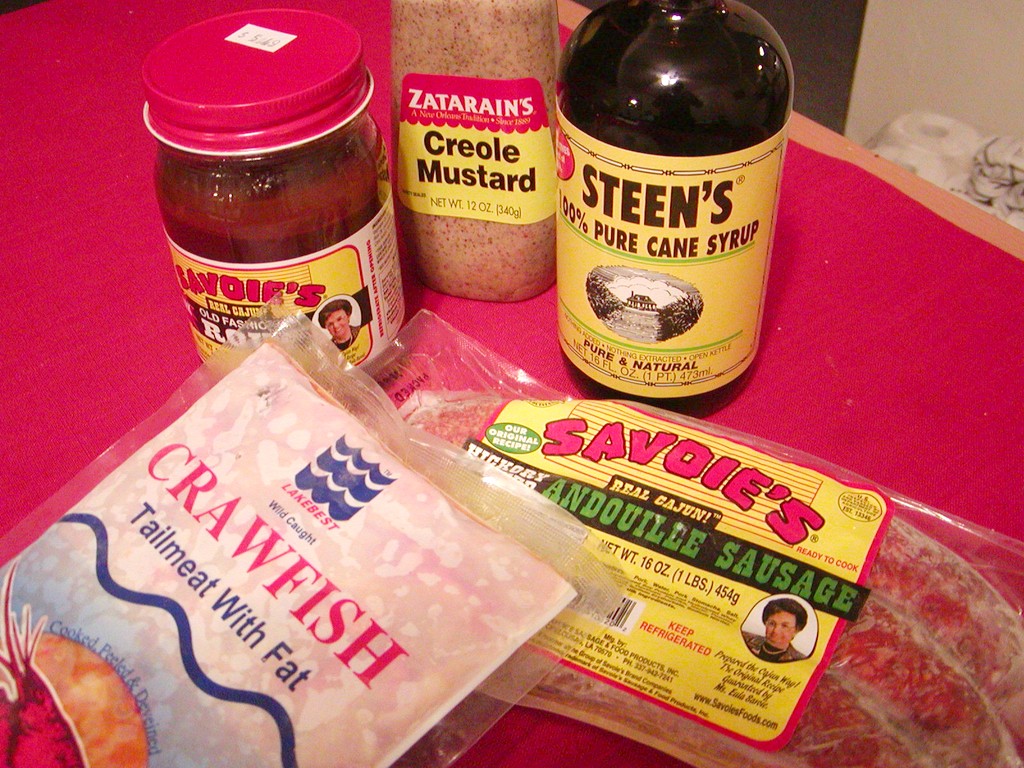
I made groceries and here's what I bought: a bottle of Steen's cane syrup ($7), a jar of Savoie's roux ($5.50), a bottle of Zatarain's Creole mustard ($5), a pack of Savoie's andouille sausage ($8), two bags of Camillia red beans ($2.50 each) and one pound of frozen crawfish tails ($14) - for a grand total of $44.50 before sales taxes.

Now, back in New Orleans I could have bought all of those things for around half that amount.

I suppose it was a worthwhile expense. It's nice to open the refrigerator or pantry and see a little bit of home staring back me.

I can't wait to get those beans cooking! More on that later.

Monday, September 04, 2006

Really Big Love

With news breaking last week of the capture of polygamist-renegade Fundamentalis Church of Jesus Christ of Latter Day Saints prophet-FBI fugitive Warren Jeffs, our trip to the Utah-Arizona border area wouldn't have been complete without a stop in Colorado City and Hildale.

The towns, which run together across the state line, are home to members of the church known in shorthand as FLDS, a group that spilt from the Mormon church decades ago and practices plural love.

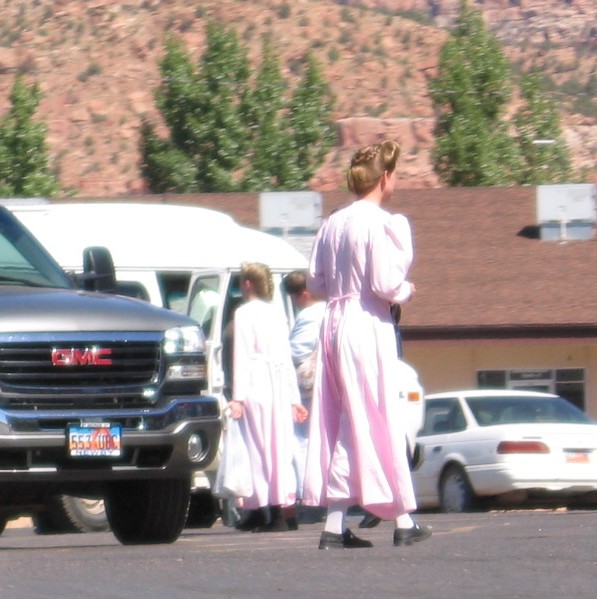
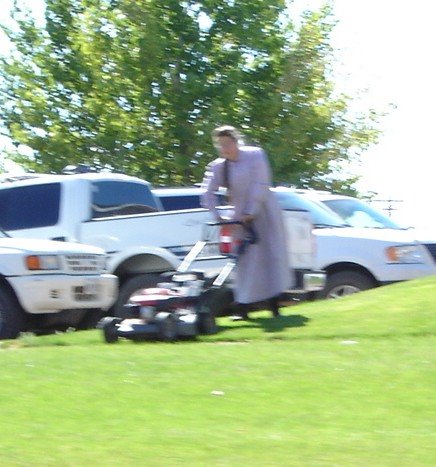
We tried to be discreet as we drove through town snapping photos of locals wearing traditional FLDS garb - a late 19th Century-inspired dress code that reminded me of the Pentecostals whom I used to encounter in central Louisiana.


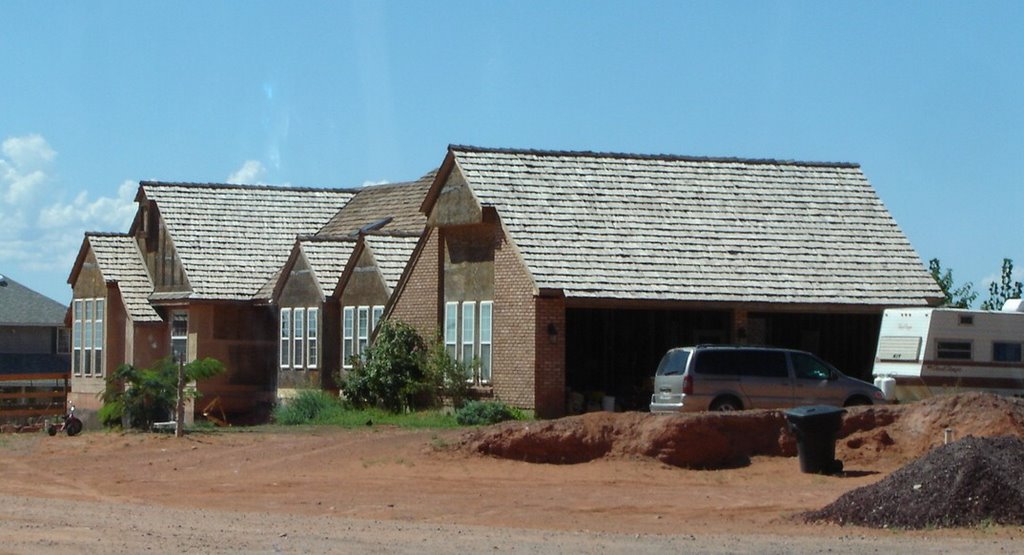
The large, rambling houses that fill the towns leave little room for doubt about living arrangements.


Zion Canyon


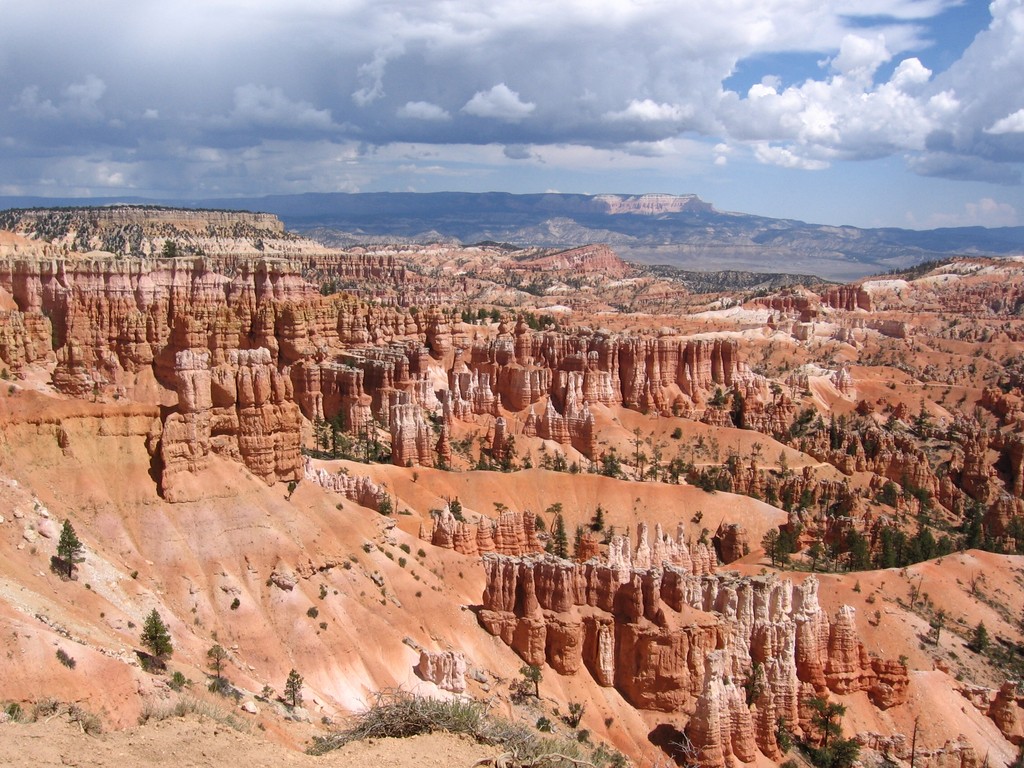
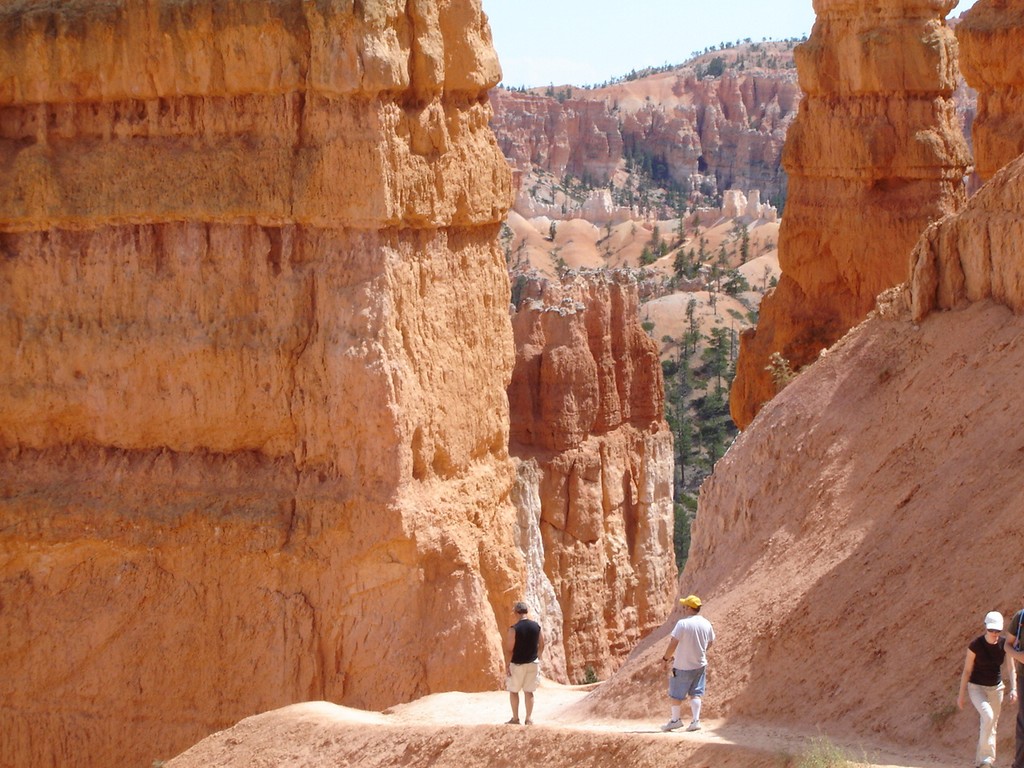
Bryce Canyon


Sunday, September 03, 2006

Canyon hopping

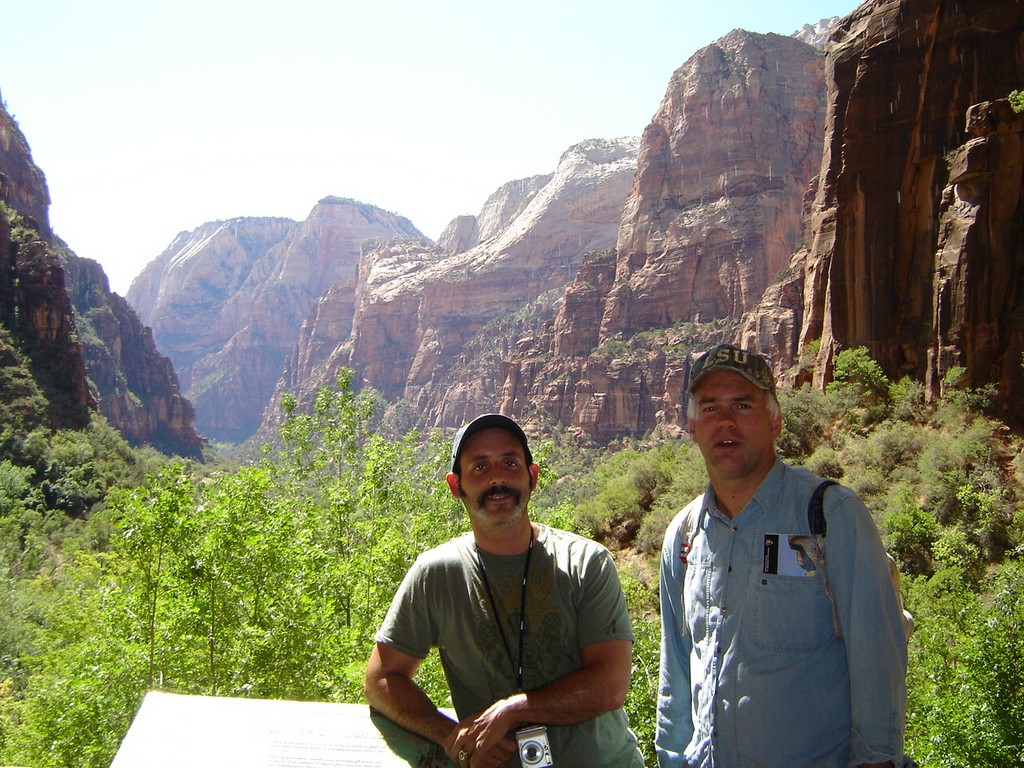
We're spending the Labor Day weekend hiking Zion and Bryce canyons in southern Utah and the Grand Canyon.
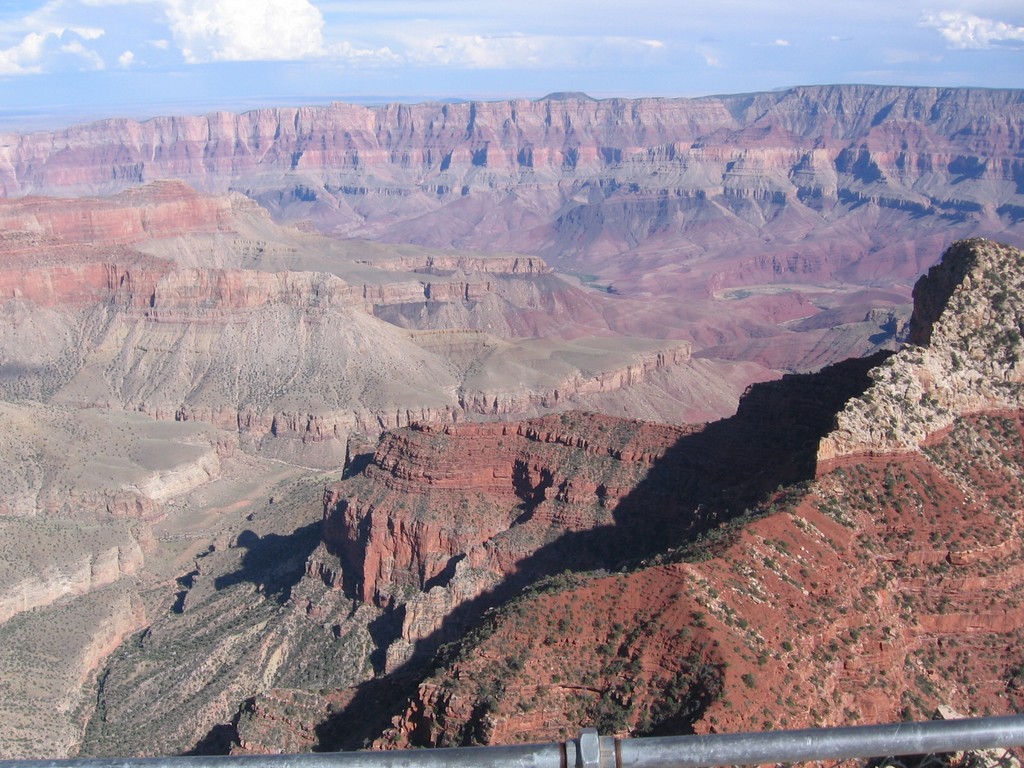
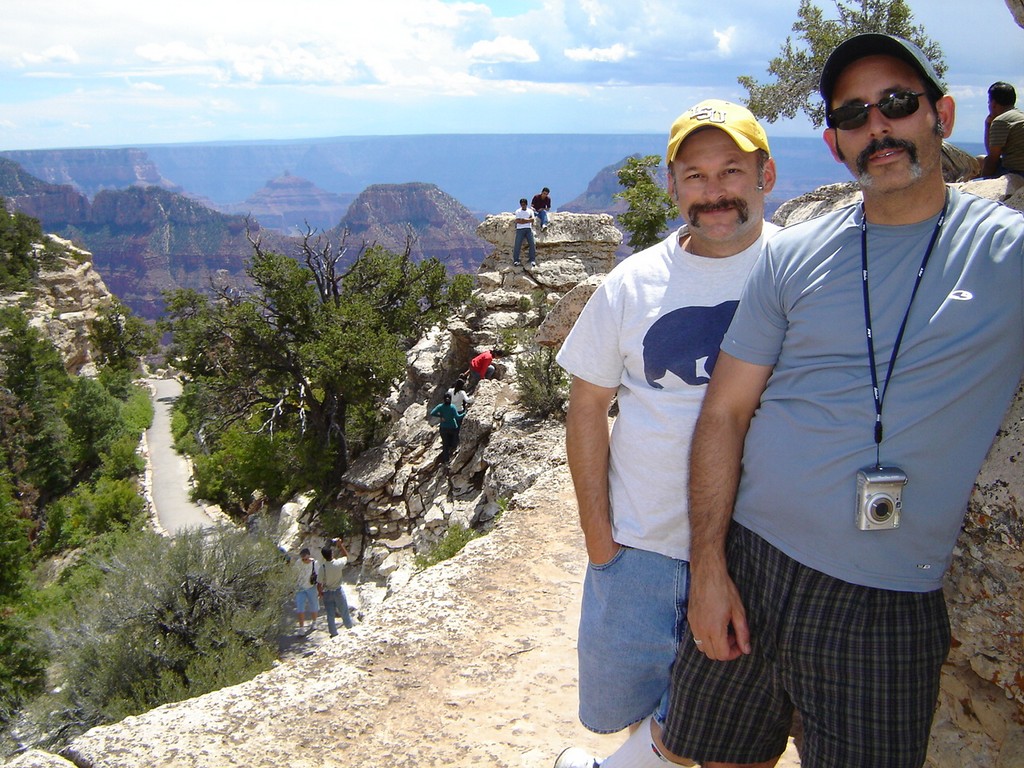
Our first stop out of our base in Kanab, UT, (site of numerous Western movie productions in the 1950s and 1960s) was the G.C.'s north rim, which I favor over its southern side because of its higher elevation (cooler temperatures), old forests, more plentiful wildlife and more spectacular views.


Wednesday, August 30, 2006

More Katrina memories


Emails that I sent to friends and family one day after the storm, when we made our now famous 7-hour-long escape to Baton Rouge from the flooding Times-Picayune building in the backs of newspaper delivery semi-trucks. That's me, above, in the middle with the blue shirt. Click here to watch video of our escape.

(Tuesday, early morning)
The water outside has risen about three feet overnight, and continues to go up. Our building is an island. Another couple of feet and the water will start flooding our bottom floor.
This is "the worst case" scenario.
Things have turned very ominous here now. Senior management here is starting to talk about evacuating us. Local officials are pleading with people over t.v. and radio to get out of the city now. Aaron Broussard, president of Jeff. Parish, just said on the radio that he's told his wife not to come back for at least a month. This is the reality. We're all homeless now because we are cityless.
Fortunately, I think we're in a better situation than many others. We still have enough food and drinking water for a few days. We have at least three boats here. And the building is located next to the elevated highway. We can get, by boat, to the highway but getting picked up by vehicles isn't an option because the central part of the city is totally cut off from highway exits. It seems the only way for us to get out right now is by helicopter. That's certainly an option because a helicopter can land on the elevated highway.
Our ability to report is becoming more limited. With only a handful of boats, not many of us can get out to work. I suspect over the next couple of days, we'll start reporting on our website more and more about what's happening in our immediate viewing area and on our own personal experiences here at the building. But we still have limited power from our generator.
We're still able to communicate through some cell phones and computers over the Internet. We have supplies. We can't drink the water out of the faucet but we can use it for bathroom reasons.
The looting is pretty bad according to the reporters and photographers who went out into the city yesterday. Things will only get uglier as people start running out of resources and become more desperate. I'm guessing that at some point, we might get evacuated out of the city to the north shore or to the river parishes to the west.
Its becoming hard to imagine the city proper recovering from this. With highway damage, companies and businesses are going to have to relocate out of the city. People who can't come back to work - because their businesses and jobs in the city won't exist anymore - at some point will have to consider taking jobs somewhere else and establishing some semblance of a life somewhere else. How many of those people will come back? I'm afraid that the New Orleans we all knew is gone forever.
I know this sounds almost hysterical, but the devastation here is almost unimaginable. I'm charging my cell phone again but I don't know how well it is working today. I couldn't make any calls in or out yesterday. But many others here are able to use their cell phones. I'll call out as much as I can. Same with email. Pray for us.
Keith


(Tuesday, early morning)
We do have another way out right now. We can get on the highway in front of the building and cross the bridge over the Miss. River, then follow the highway west along the West Bank to St. Charles Parish, cross back over the river and reconnect with I-10 and head west. Our trucks still can get us out of here, but we don't know if they can bet onto the highway from here. The water appears to be rising about 1.5 inches per hour. people are starting to make their way to the elevated highway (Pontchartrain Expressway) and presumably walk across the bridge. The word we have is that the West Bank (on the other side of the river) is dry. About the only noise outside is from helicopters making constant passes over the city.
Keith


(Tuesday, late morning)
We're evacuating to the West Bank immediately, then possibly to Baton Rouge. Can't take much. Just my computer bag. not even clothes. trucks can still get to interstate but window of opportunity to get us out is closing. also beginning to smell fuel in building, probably from gas, diesel and oil in the flood water. So safety here will increasingly be at risk. Will update whenever possible. Not sure when.
Keith


(Tuesday evening)
After a long and somewhat harrowing trip out of hell, we arrived in Baton Rouge late this afternoon. I've got a few changes of clothes, my computer, cell phone, a box of ink pens, a note pad, my shower bag and, of course, my LSU football tickets :)
About 200 of us from the paper vacated the building around 9:30 a.m. as the flood water was entering the building and up to about 3 feet outside the building. We road in a convoy of seven semi-paper delivery trucks. Actually, we road on the floor in the backs of the trucks with the backs open for ventilation.
Things were quickly getting dangerous. We could smell diesel and gas fuels throughout the building (probably from the water)and we received word that prisoners were rioting in the prison just across the interstate from the building.
We crossed the main bridge over the Mississippi River to a dry West Bank. Then without any notice, my truck, the last in line, pulled over to the side of the elevated highway.
Our driver came to the back and called for his wife and son to get out, explaining that their house was only a mile or so away. They proceeded to unload about six pieces of fully stuff luggage and a large pet carrier with three dogs.
All the while, we were shouting for him to get back in the truck so we wouldn't lose the convoy. Remember, we didn't know where we were going and had no way to communicate with the other trucks.
Once his family and belongings were out, he turned to us and announced that we would need a new driver because he was staying with his family! We were stunned. After failing to convince him not to abandon us, the head of our I.T. department and one of my colleagues in the Money section took over the truck controls.
About two hours later, we caught up with the convoy when they stopped for a bathroom break. I say that loosely. Nothing is open in southeastern Louisiana, so our bathroom breaks were outdoors.
We went to Houma first, but their local paper could only accommodate a small contingent of our editorial staff. So we left for Baton Rouge. After getting lost and having to backtrack about half an hour, we finally arrived in Baton Rouge - 6.5 hours after we started! That's right, I spent 6.5 hours in the back of a semi in 95 degree weather.
My fellow business writer Greg Thomas and I are staying with my sister, Michele, and her husband, Eric.
When we arrived at the Advocate newspaper's downtown office, we were met by television news crews. I'm told that our evacuation from downtown New Orleans also made the ticker on CNN.
The paper has set up shop at a Baton Rouge technology center. After a strategy session for tomorrow's work, a church group arrived with hotplate diners for us - our first meal all day!
Greg and I have to be at work for 8 a.m. Editors were spending the night buying computers and other equipment, and renting SUV's to make trips back to the city.
I'm hoping to get into the city as soon as possible with the first power utility repair crews.
Looks like we'll relocate to our West Bank and North Shore bureaus as soon as power is restored there and the buildings are functional again, but that could be several weeks.
Things are as terrible as they look on TV and in the newspapers. The water continues to rise. It appear my neighborhood will have 10 to 15 feet of water by Wednesday. Thankfully, our house is raised about 12 feet off the ground. Hopefully we'll get by with minimal damage.
I finally have cell phone service again.
For my cousins in Austin, I'm planning to call into my friend Kevin at the local radio station to give him a live report on things here.
At this point, I'm taking things one hour at a time. Driving through the city and seeing the destruction was devastating. I've felt on the brink of collapse numerous times today. I think I'm due for a big huge cry sometime soon. It's all terribly sad.
Thanks for all of your offers of help and wishes of love and support. It sounds so like such a cliche, but they do give me comfort.
I've finally had time to think about all of my friends who stayed in the city. I haven't heard from any of them and don't know their fate. I pray for their safety and comfort.
Keep all of us in your prayers, especially the hundreds, if not thousands, of people who tonight are sleeping in homes, attics and on roofs in the city, stranded, alone and frightened.
Much love,
Keith

Tuesday, August 29, 2006

A year ago

Emails that I sent to friends and family on Aug. 29, 2006 from inside The Times-Picayune building in downtown New Orleans as Katrina tore through the city:

(Monday, 9:30 a.m. as worst of storm began)
Just got a wi-fi connection here at the office. don't know where its from, but i'm happy to have it. busy working but will update everyone. the atmosphere here is pretty intense. mixture of fear, adrenaline. we're still safe here. trees down all around us. Flooding approaching the back of the building - water about 3 feet deep in some parts of the parking lot. lots of cars underwater. the weather is unbelievable! Constant, terrible wind. can't tell the differnce anymore between sustained wind and gusts. we're getting terrible reports already - 80 windows blasted out at the Hyatt hotel near the Superdome. as you've probably already heard, holes forming in the roof of the Superdome with is packed with about 30,000. They've been evacuated from the dome floor to the upper elevated levels. a report that the miss. river is topping the levees downtown and beginning to flood the French Quarter. Also massive flooding in the lower 9th ward, on the east side of the industrial canal. water so high there that some people have gone onto their roofs. looks like the phone lines are starting to fail. its looking like massive damage around the city already. and massive flooding too. cell phone systems starting to fail. but it looks like we still have landlines. that's all for now.
keith


(Monday, late morning)
the weather is still pretty bad but the worst clearly has passed us. my guess is that wind is down to 70- 80 mph, with higher gusts. rainfall much lighter. my cell phone is down. but can still make some calls from the land lines. we're hearing reports of terrible damage and flooding. can only imagine that things will be much worse once people get out and assess damage. we're all still safe here. hot and sticky - without airconditioning - but safe. I can't believe its only 11 a.m. It feels like it should be the end of the day. We're putting together an issue of the paper today but can't print it until tomorrow at the earliest. But it will be posted on our web page tonight.
Anyone who wants to call me can try me at 504.826.XXXX - it's not my regular line, so don't bother leaving a message. If I don't pick up, keep trying.
keith


(Monday evening)
As grim as things are here in New Orleans, I can't help but be thankful that I made it through this storm unscathed physically.
I could spend the next few hours writing about what I've seen and done today, but I'm too tired, I'm hungry and I desperately need a shower (the colder the better!)
Many of you are probably curious about how we're managing here at The Times-Picayune main office. We'be been without electricity since 4 a.m.,but a generator is powering a small collection of computers being used by alternating shifts of editors, writers and photographers (thank goodness the picture people do everything digital these days).
About 30 of us reporters fanned out as far as we could this afternoon to assess the damage and start gathering the first elements of the remarkable stories we will be telling over the coming months about Katrina and her aftermath.
I reported on the electricity and telephone situations - bad and likely to get worse before getting better.
The "storm" issue of the T.P. will be "published" on our web page at www.nola.com later tonight, and printed tomorrow in Baton Rouge. I encourage all of you to pull up the edition.
It's remarkable that we produced a newspaper just hours after enduring the most powerful storm to ever hit the Gulf Coast. I think in the years to come we all will look back at this work and the stories we will produce in the coming weeks and months with pride and satisfaction.
I could say much about damage to the city but the pictures on our web site and others do more justice.
Myself and a few other reporters ventured outside for the first time around 4 p.m. and climbed onto the elevated expressway that runs in front of the office for a clear view of the Superdome and high-rise district.
It was a painful scene to view. Most of the buildings look as though they had been bombed. I've never seen anything like it. It was terribly sad - not that the buildings were damaged, but that my city, my home was torn to shreds. It took everything I had not to cry.
One item of continuing concern is the rising water approaching the center of the city. It appears that the flood waters of Metairie and eastern New Orleans are slowly flowing toward us. Things still could get much worse for us.
Here are my immediate plans. As soon as my editors finish editing my story, I'll call Mom and Dad, take a shower, then savor a few bottles of Abita Amber and some smoked salmon that a fellow reporter is sharing with us.
The moment will be hot, sticky, dark, and even sad, but I will eat my fill of it as though it was a fine feast. I'll probably never experience anything like this again. I want the memories to be deep and lasting.
I feel like I've been away on a very long and lonely journey. I miss all of you terribly. I miss my house. I miss Nero and Topaz. I miss Constantine. And I already miss this place I call home.
The truth is that our journey has barely begun. Keep all of us in your thoughts and prayers.
I love all of you,
keith

Monday, August 28, 2006

Why New Orleans matters

For those still asking why they should care or help pay for the recon-
struction of New Orleans and wondering why a city exists in such a vulnerable location in the first place, The Times-Picayune succinctly provided the answers today in an editorial previewing the one year anniversary of the hurricane:

"The location of greater New Orleans is at once ingenious and perilous. Having a settlement at the confluence of the greatest river in North America and the Gulf of Mexico has reaped tremendous political and economic benefits for the United States.

The hardy, resourceful souls who settled here almost 300 years ago carved a world-class city out of marshland. Those early settlers withstood plague and war and built a seaport filled with graceful homes and sweeping boulevards. They mixed French, Spanish, African and Caribbean influences to concoct a delectable cuisine. Later generations gave America the gift of jazz and turned street parades into high art."

But wait, there's more.

"The state is a prime supplier of oil and gas and seafood to the nation. Nearly 34 percent of the nation's natural gas supply and more than 29 percent of the crude oil supply move through coastal Louisiana. Eighty percent of production in the Gulf of Mexico occurs off our coast.

As for seafood, 40 percent of the shrimp, oysters, crabs and fish consumed by Americans are from here."

Of course, as New Orleans goes so goes the state of Louisiana. Now do you get it?

Wednesday, August 09, 2006

How to help T.P. photographer

John McCusker is a fantastic photographer, a talented journalist, a father and a kind friend.

You can help John and his family by making a donation in his name to the Friends of The Times-Picayune, a non-profit group formed immediately after Hurricane Katrina by former T.P. employees to raise money for T.P. staffers who suffered losses in the storm.

Saturday, August 05, 2006

Drugs threaten New Orleans recovery

A devastating article in Saturday's New York Times chronicled the vicious return of high-level drug trafficing in New Orleans.

"The drug trade in New Orleans is flourishing again, after its dealers, who evacuated to the regional drug hub of Houston, forged closer ties to major suppliers from the Mexican and Colombian cartels. They have since brought back drugs to New Orleans in far larger shipments than before . . . essentially creating violent distribution gangs now spread over a much bigger area . . .

"As the drug-dealing returns, its effects are proving deadly for New Orleans, where the police say that fights over turf for distributing the drugs are the main reason for a spike in killings that threatens the cityĂ‚’s recovery. Even though its population is less than half of what it was before the storm, New Orleans recorded 22 homicides in July, the same number that it averaged each month in the three years before the hurricane."

-- "Drug problem escalates after Katrina," NYT, Aug. 5, 2006

There was much hope and optimism in the months after the storm that these sorts of problems were part of the city's past. It was almost as though the city, through cathartic agony, had finally earned redemption for the drug scourge that had long kept New Orleans teetering on the edge of disfunction.

It's painfully clear that those expectations were Pollyannaish at best.

Friday, August 04, 2006

Hundreds march against hate in S.D.

A big crowd turned out for Friday's march through Hillcrest, San Diego's main gay neighborhood, to protest last week's baseball bat and knife assault of six men as they left the city's gay Pride Festival. One victim, whose skull was bashed in, remains in serious condition.

Openly gay city Councilwoman Toni Atkins addressed marchers in front of the Obelisk bookstore on University Avenue.

This sidewalk (click on any picture to make it larger) in front of the bookstore was the scene of a gay bashing in 1991 that claimed the life of John Wear.

Police Chief William Lansdowne was among several officials, including San Diego Mayor Jerry Sanders, who addressed the crowd during a rally prior to the march.

Amazing how TV cameras always manage to find the Sisters of Perpetual Indulgence no matter how large the crowd.

Who says life in California is more expensive?


Got my first electricity bill since moving into my apartment. But before I tell you how much it is, let me remind you of some important facts:

- July was a scorcher here in southern California. Many cities, including San Diego, hit historic high temperatures - some several times.

- My entire apartment runs off electricity.

- I don't have an air conditioner, but I do have several fans that run nonstop when someone is in the apartment.

- In New Orleans, a typical July electricity bill for an apartment or house this size would be in the $280 range (probably higher now given the fact that electricity rates have gone up to pay for damage from Katrina).

So what do I owe in San Diego? An unbelievable $43.84!

Sunday, July 30, 2006

It's the heat AND the humidity, stupid!

Gray damp skies hung over my neighborhood and the rest of San Diego all weekend, feeding the mopish mood that has settled over many southern Californians in recent weeks.

Last weekend it was scorching triple-digit temperatures that made people run for the nearest beach, swimming pool or cold shower.

Things clearly aren't as they should be.

July weather in San Diego is supposed to be nothing short of ideal. Average rainfall for the month is a nearly immeasurable 0.03 inches, and the average high temperature hovers around a comfy 76 degrees (24.4 C).

With July falling at the height of the region's dry season, humidity this time of year is "almost unknown," according to the National Weather Service.

Nothing has been normal this July though.

It actually rained yesterday! Several times! Humidity levels, at times, have topped a soggy 75 percent. And the blazing heat is suspected in more than 140 deaths across California in recent weeks.

Weather forecasters say that an uncommon high pressure dome is sitting over the desert southwest, pumping hot air into southern California like a furnace. Late last week, an equally rare mid-summer thunderstorm system in Arizona and New Mexico added moisture to the mix.

None of this would matter much if air conditioners cooled and dried every enclosed space here, but they don't. Floor and ceiling fans are usually all that's needed to circulate air through rooms to keep things relatively comfortable. But that's not working this summer.

Like many others here, we've reached our limits here in my un-airconditioned apartment. We're going shopping for a portable air conditioning unit. That's easier said than done. I've heard stories of grabbing and shoving matches breaking out over the limited supplies of air conditioners in local stores. We'll be lucky just to find one on a shelf.

80's overdose at S.D. Gay Pride


Recognize this face from the past?

I'll give you a few hints. This Long Island native exploded on to the pop music scene in the late 1980's with a No. 1 album (Electric Youth) and two No. 1 hits ("Foolish Beat" in 1988 and "Lost in Your Eyes" in 1989).

Yes, it's Deborah (Debbie) Gibson. She headlined the Saturday show at the main performance stage of the Gay Pride Festival.

For those who haven't kept up with her career, she has continued to produce music over the years and has appeared in a string of major Broadway shows.

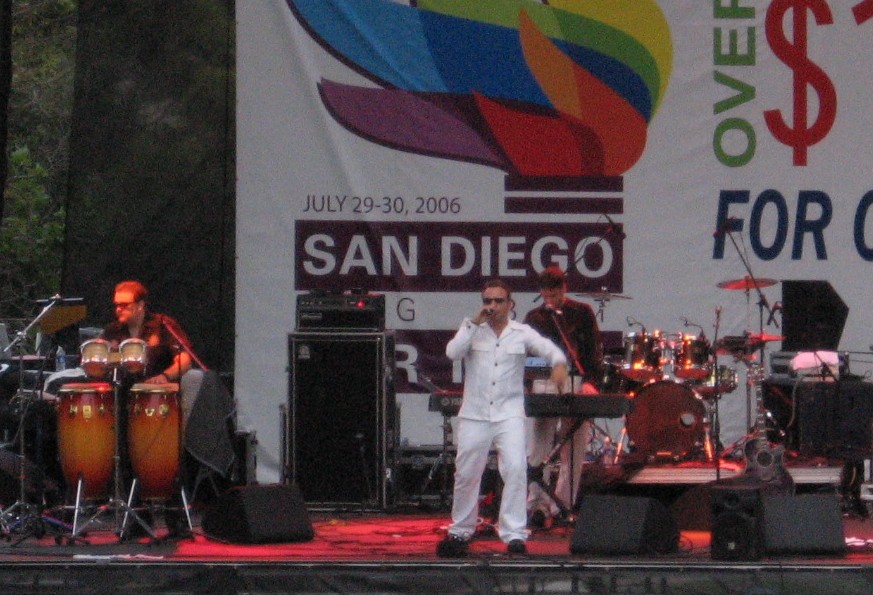
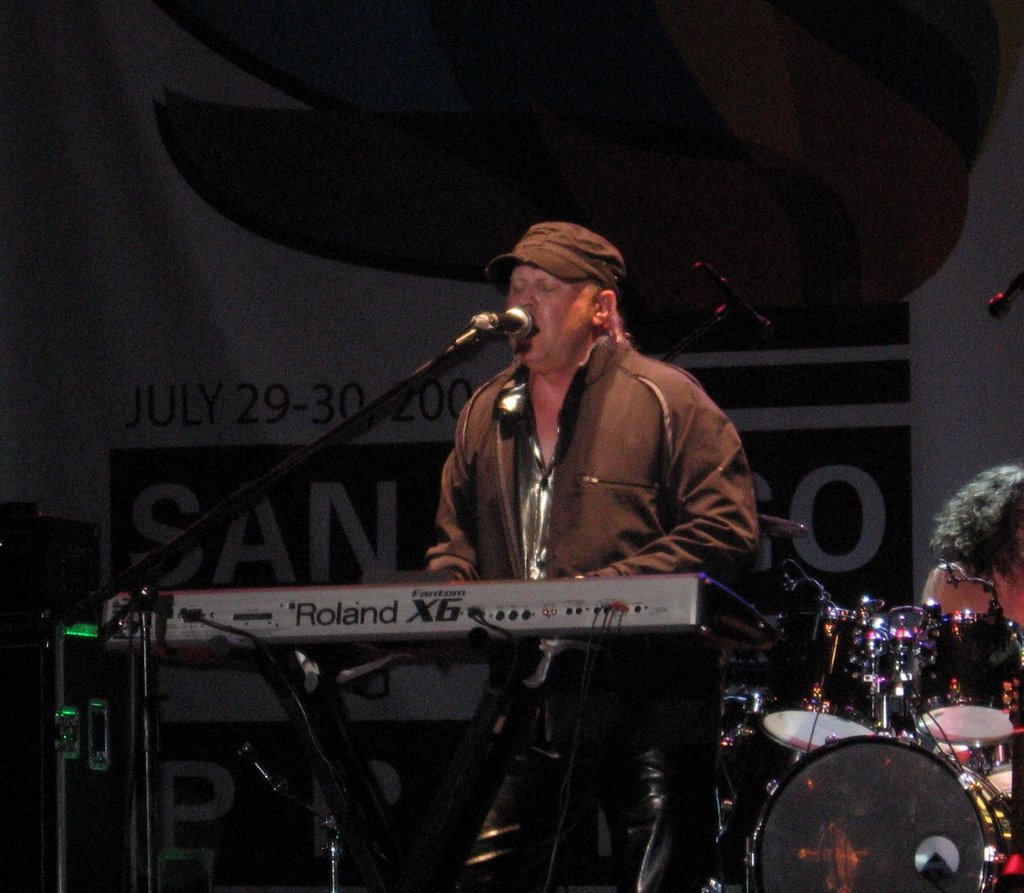
Also appearing on the same stage were recreations of the 80's New Wave one-hit-wonder groups When in Rome and A Flock of Seagulls.

WIR (pictured above) was re-formed by the original keyboardist, Michael Floreale, with a new lead singer and two other new members after the group's only hit, "The Promise," was resurrected in last year's hit movie "Napoleon Dynamite."

WIR's new front man Jayden Frost (an actor/singer/former professional wrestler who hooked up with Floreale in Dallas) signed autographs after the show for fans who probably mistakenly thought they were meeting the group's original lead singer.

Mike Score, the only original member of A Flock of Seagulls.

Rex and his new toy.

Thursday, July 27, 2006

Neighborhood eateries returning to N.O.

Good news from Ian McNulty, food writer for New Orleans' weekly Gambit. He's written of late about the re-opening of numerous restaurants outside the tourist districts of the city.

Some of them, such as Elizabeth's in the Bywater and Juan's Flying Burrito in badly flooded Mid-City are among my favorite places to eat.

Eating out is a key element of life in New Orleans unlike most other places, such as San Diego, where dining at a restaurant is less a social affair and more a function of biology.

Check out Ian's take on the New Orleans eating scene here.

Saturday, July 15, 2006

L.A. Times gets it right

A sad feeling of familiarity washed over me as I read a great story in today's edition of the Los Angeles Times (read it here) about New Orleans' precarious and slow recovery from Hurricane Katrina.

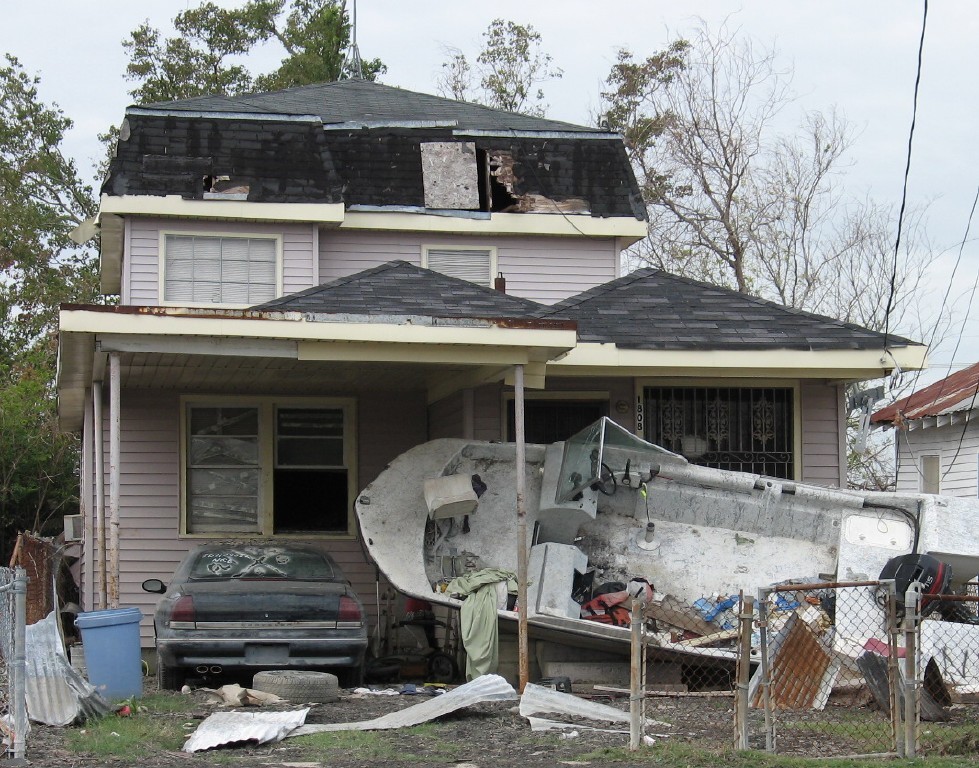
The fact is scenes like this one above, which I photographed six months ago, still fill the city. Clearly not much has changed since I left New Orleans in late March for a new life in southern California.

Nearly everyone here thinks that life is largely back to normal in New Orleans and the rest of south Louisiana. And I suppose that's the same for most people in other parts of the country.

I know better, of course. There are still piles of garbage along the streets and huge clusters of flooded cars under elevated highways. The electricity still goes off periodically. The mail isn't yet reliable. Grocery stores and dry cleaners haven't reopened. As the L.A. Times says, the "new normal" in New Orleans is quite different from the normal the rest of us know.

Like many other friends of mine there, Tommy in the Bywater is trying to make the best of things. He's working like crazy to repair his flooded rental house and to deal with the fallout from a crooked contractor. In a recent email, he noted that his other rental property in an unflooded area of the city has risen in value. Despite all of the continuing problems - including the return of crime - neighbors are joining together in ways they never did before the storm to resurrect their communities. And some people who left are coming back because no other place feels like home.

"Everything isn't bad if you look at it honestly," Tommy wrote. "There is a lot of good life left in this city, but you have to look at it and acknowledge its presence."

I hope there are plenty more people like Tommy still out there.

Sunday, July 02, 2006

Playyyyyy ball!

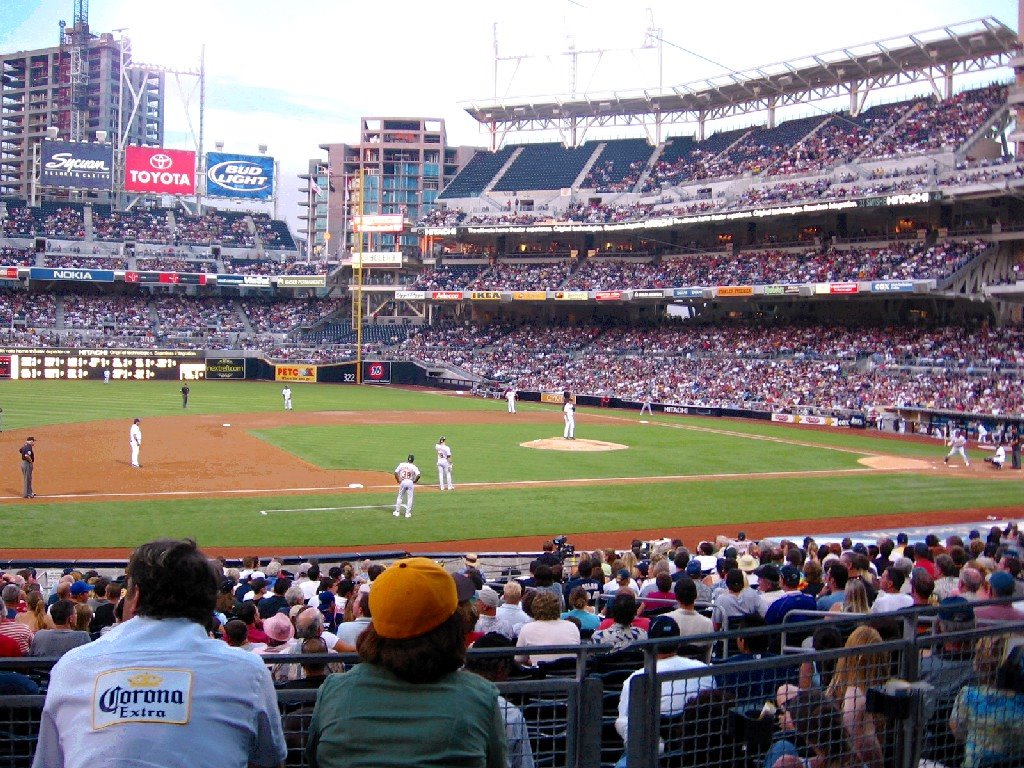
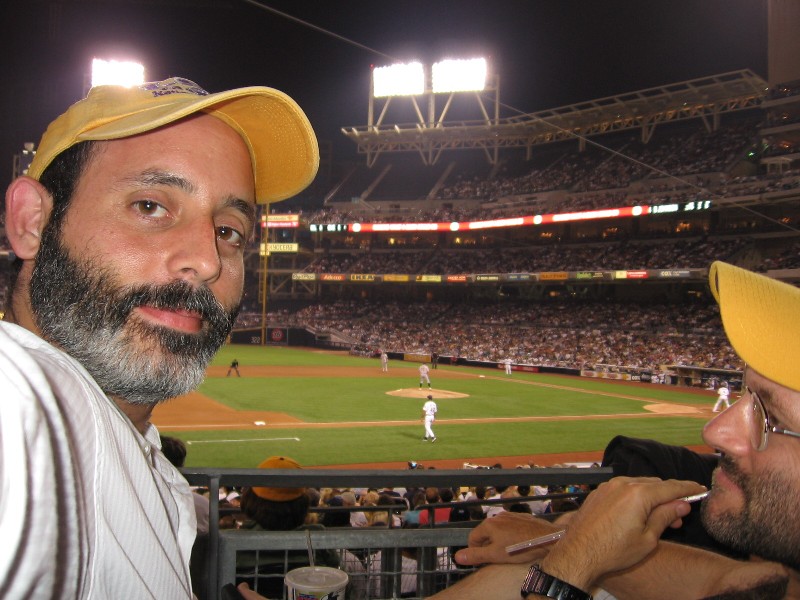
Went to my first Padres game last week and watched the local team beat the Oakland A's 3-0.

Being a typical Southern college football nut, I'm pretty much a pro-baseball novice (I'd previously been to three Astros games and one S.F. Giants game). But I really enjoyed myself and can easily imagine seeing more of the Padres.

Our seats were sweet - just behind third base at the bottom of the stadium's second tier.

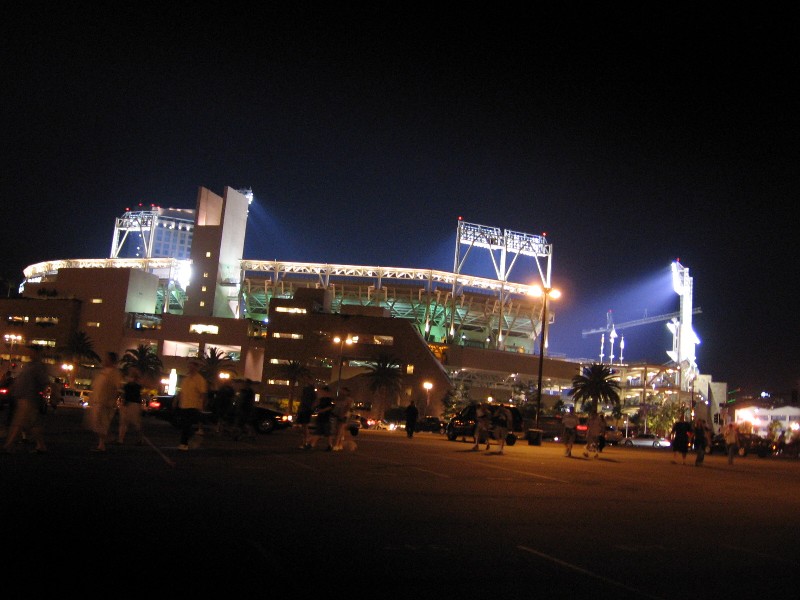
PETCO Park is only a few years old and has been hailed for incorporating a historic brick warehouse into its design. Up close, the stadium is quite nice - lots of landscaped terraces, open-air walking spaces and even a few water features. But outside from a distance, the stadium looks more like a parking garage than a sports venue.

Sunday, June 25, 2006

My new hood

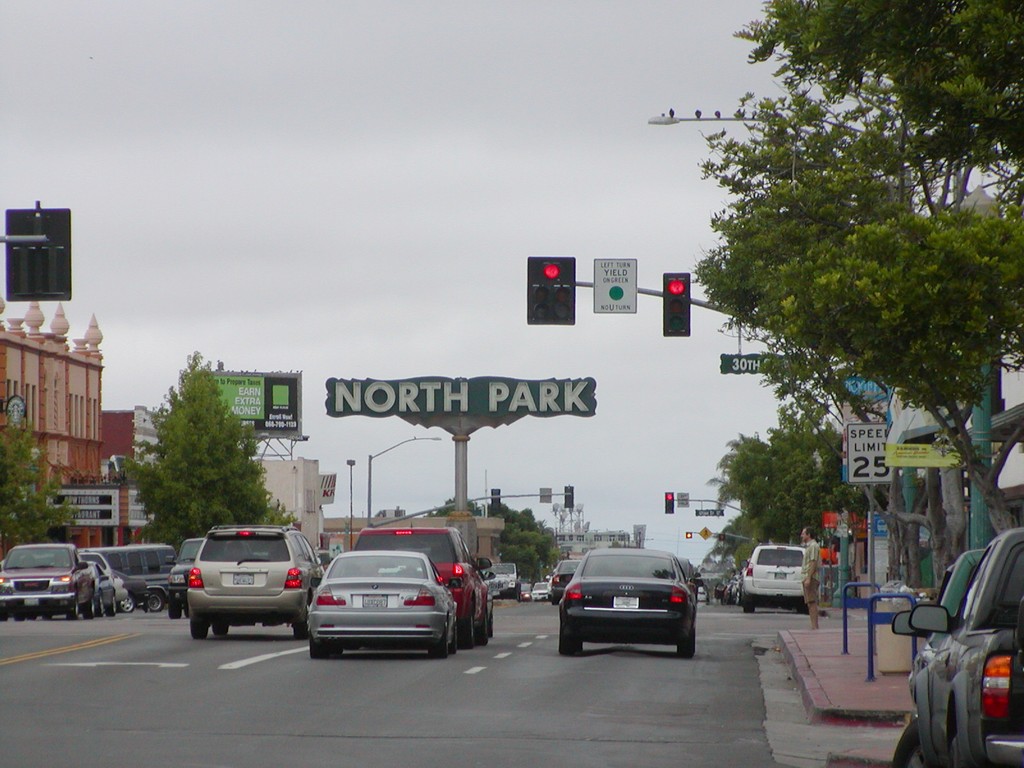
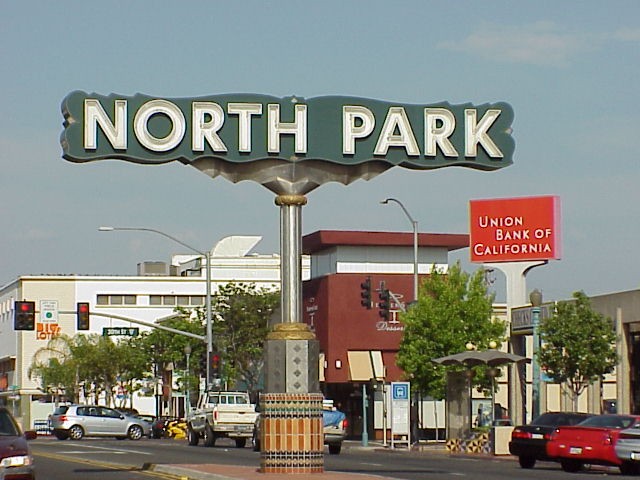
It's official. I'm now a resident of the epicenter of North Park, a quirky, bustling area caught between a multi-cultural past and a gentrified future.

One Web site describes North Park this way, "A hodgepodge of cozy, tidy pockets of Craftsman homes on the north edge of Balboa Park, dense apartments and pre-interstate retail stretches."

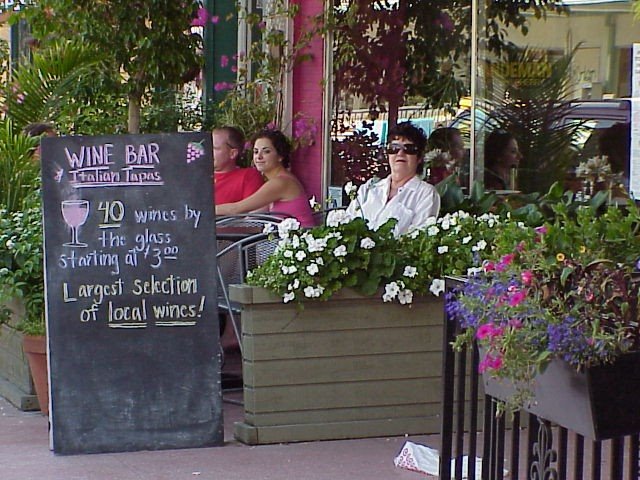
This is urban living at its best. I'm within two blocks of six coffee shops, more than a dozen restaurants (Chinese, Mexican, Thai, old-fashioned American, Italian, upscale fussion, organic/vegetarian - strangely missing is sushi), four gay bars, half a dozen dry cleaners, several thrift stores, a burgeoning art gallery row, two gyms, four banks, two full-scale grocery stores, a handful of churches and several bookstores including one run by the Sierra Club, a porn shop and a place called "Controversial Bookstore."

Adding to the eccentric charm are several second-hand stores and junk antique shops. The most recent sign of gentrification comes in the form of the renovated North Park Theater (pictured below), which is home to the Lyric Opera San Diego, a pricey restaurant and, not surprisingly, a Starbucks.

There's also a military surplus shop, at least one tattoo parlor and the San Diego County Adult Probation Services office. And in the middle of it all sits a BigLots!

The population is as diverse as the retail mix, perhaps more so than in any other neighborhood of the city.

Tragically, North Park was the site of the 1978 crash of a Boeing 727 jet that killed 135 passengers and seven on the ground. (San Diego's airport butts up against downtown, requiring planes to fly low over the central city. You can actually see high-rise office workers at their desks as you come in for landing.)

North Park feels more familiar to me than any other part of the city. That's probably because it reminds me of my favorite New Orleans neighborhoods - the Bywater and parts of Magazine Street in Uptown. I think I'm going to like it here.