Friday, March 31, 2006

Roswell, NM

From the looks of things in downtown Roswell, the alien trade ain't what it used to be. Unlike this short strip, most of the storefronts along the city's main downtown drag were empty.

No Katrina t-shirts here.

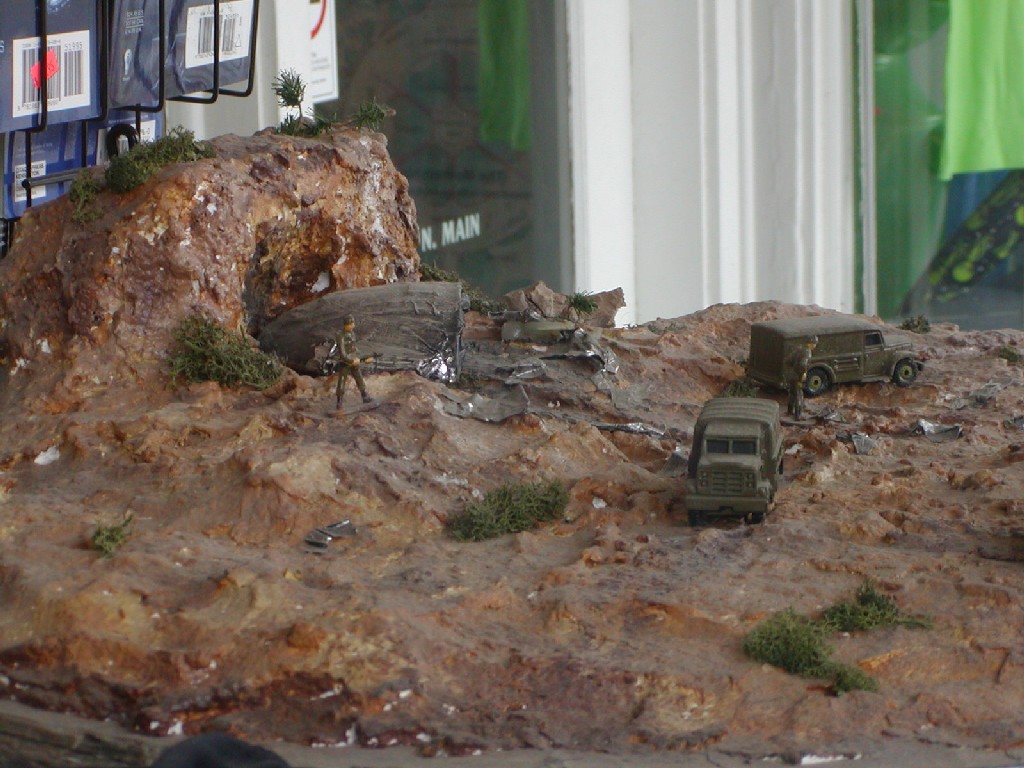
The diorama below depicts the mythological UFO crash scene from 1947 that made Roswell famous.

Thursday, March 30, 2006

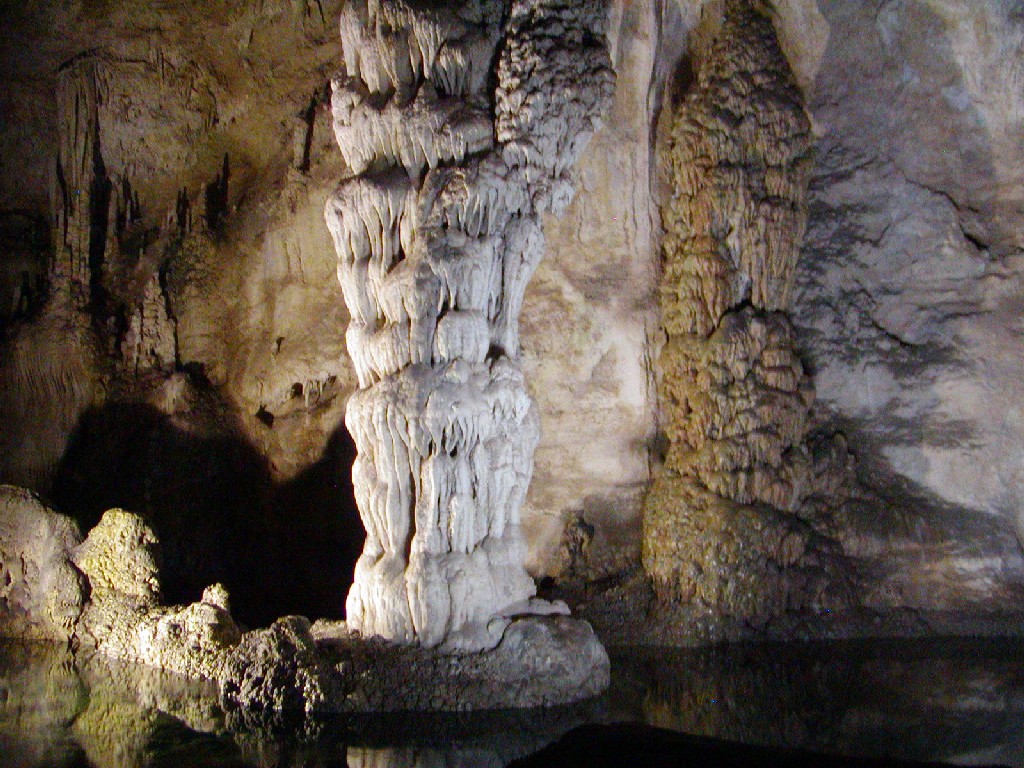
Carlsbad Caverns National Park, NM

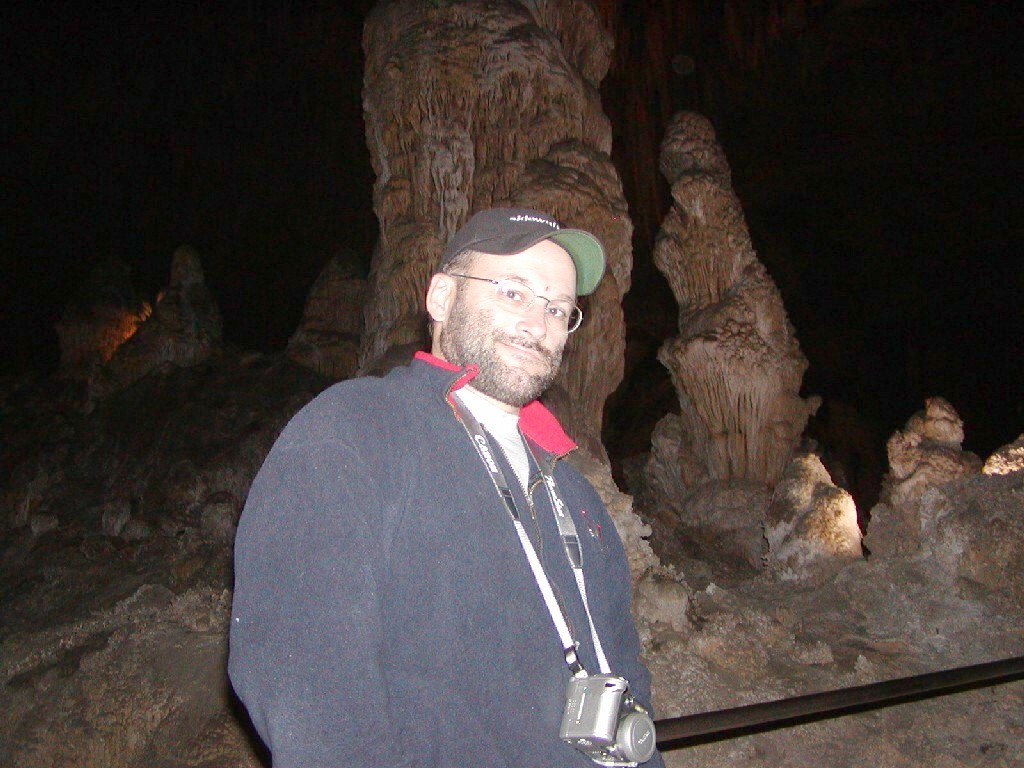
I had dreamed of touring this place since I was a kid, and the trip was well worth the wait and the effort to get here.

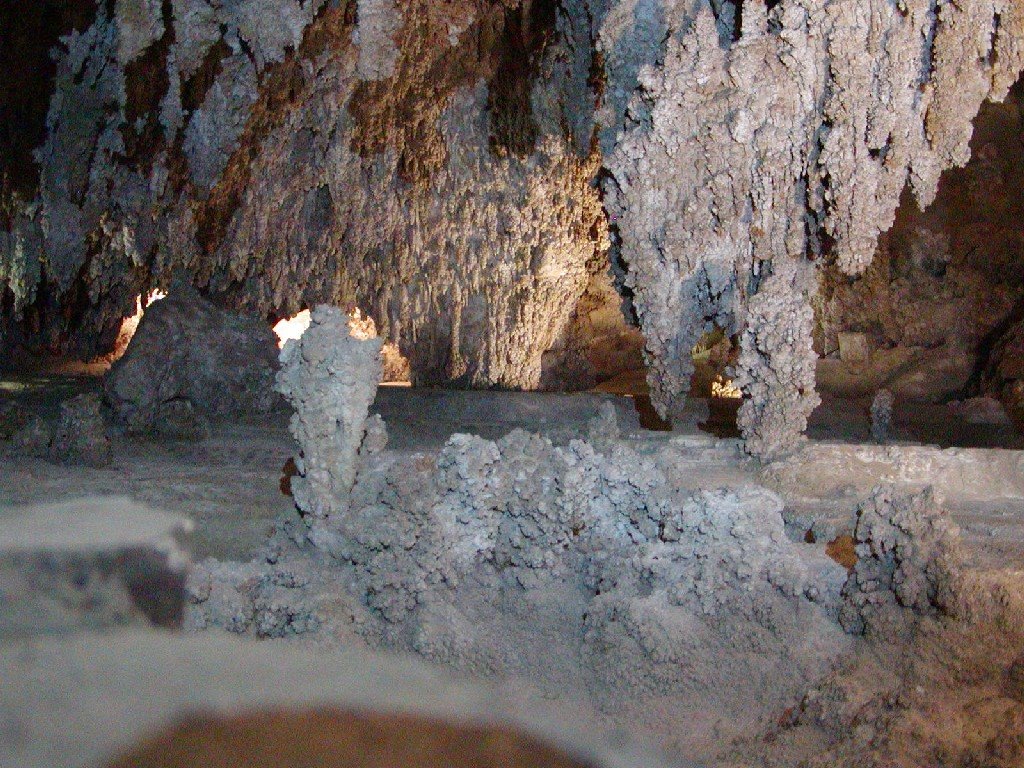
Some of the caverns are so big you have the feeling of being in a giant sports arena.

With a steady temperature of 56 degrees (F) and 90% humidity (drops of calcite-saturated water form the park's amazing stone structures) long sleeves and light jackets are needed for most of the tour.

About an hour's hike from the main entrance, 755 feet below the surface, is a fast-food restaurant and gift shop. You've got to love this country, don't you?

Of course, the Carlsbad area is know for the stuff underground but, as you can see from the picture below, the view on the surface isn't too shabby.

Wednesday, March 29, 2006

Middleofnowhere, TX (Pop. 3)

You can't get from Louisiana to Southern California without crossing West Texas, unless you make a major detour through even less interesting Midwestern terrain.

That's how we came to land in Ft. Stockton, Tx. (pop. 7,400). The first exit to the town proudly promotes a driving tour of the city's historic district. We bit.

Less than 10 minutes later we had passed down Main Street, a sad thoroughfare pockmarked by vacant lots and empty storefronts. The Pecos County Courthouse, a well-preserved hotel and the late 19th Century mission-styled Catholic church clustered around the old town square were comely, but the rest of town was far too Dust Bowl depressing.

One of the few picturesque places that we encountered during our six-hour trek from Austin was Johnson City, birthplace of President Lyndon B. Johnson.

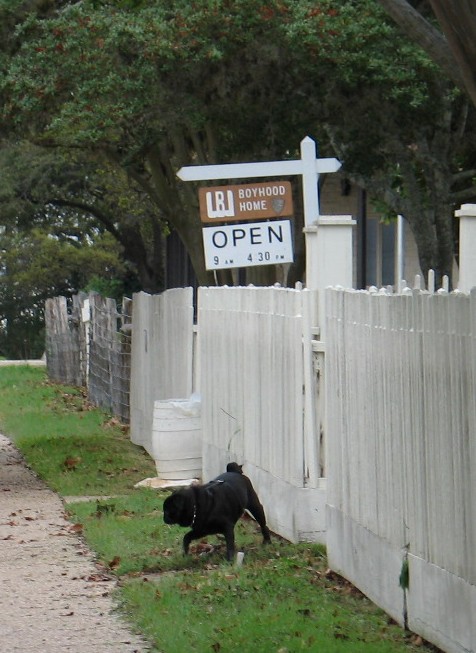
Nero expressed his gratitude for LBJ's service by whizzing on the front gate to the president's boyhood home.

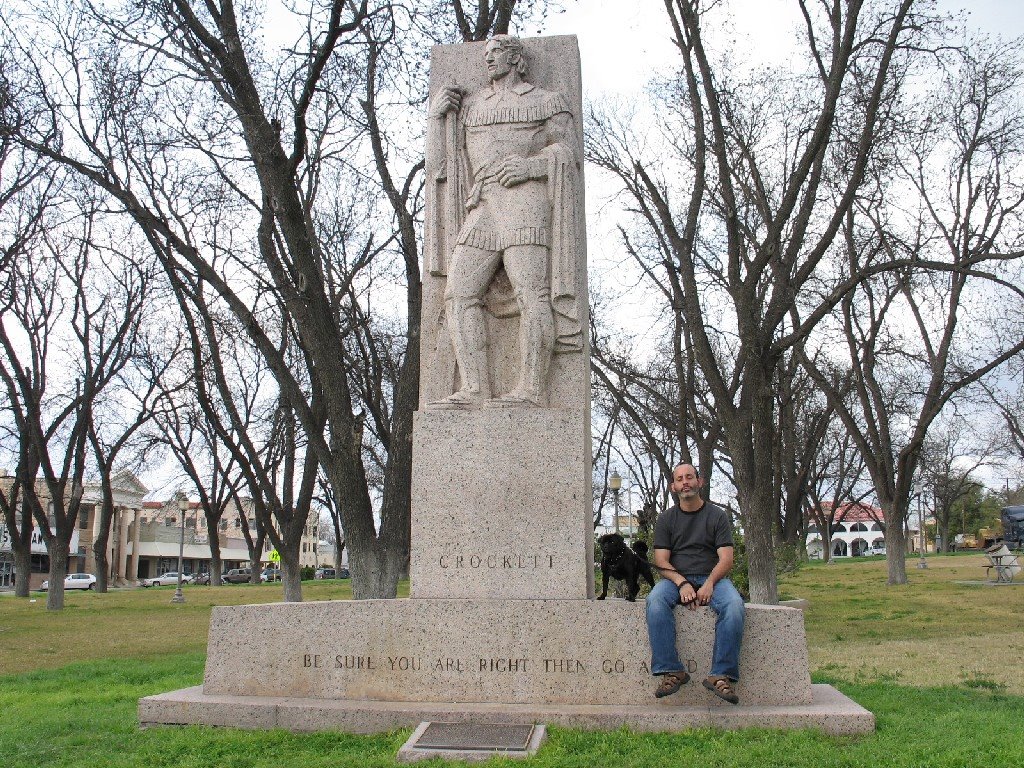
Another slightly interesting stop was made in the town of Ozona, home of the David Crockett Memorial.

As most of you will undoubtedly recall, the Tennessee native made a name for himself by serving in Congress and later dying at the Alamo, making him a mythological god among Texans.

So the big modern sculpture of Crockett in the central square of Ozona begged this question: What was he doing in Bumf&%#, Texas?

Well, apparently, he never set foot in the town. Rather, the locals adopted him as one of their own after the surrounding Crocket County was created and named in his honor.

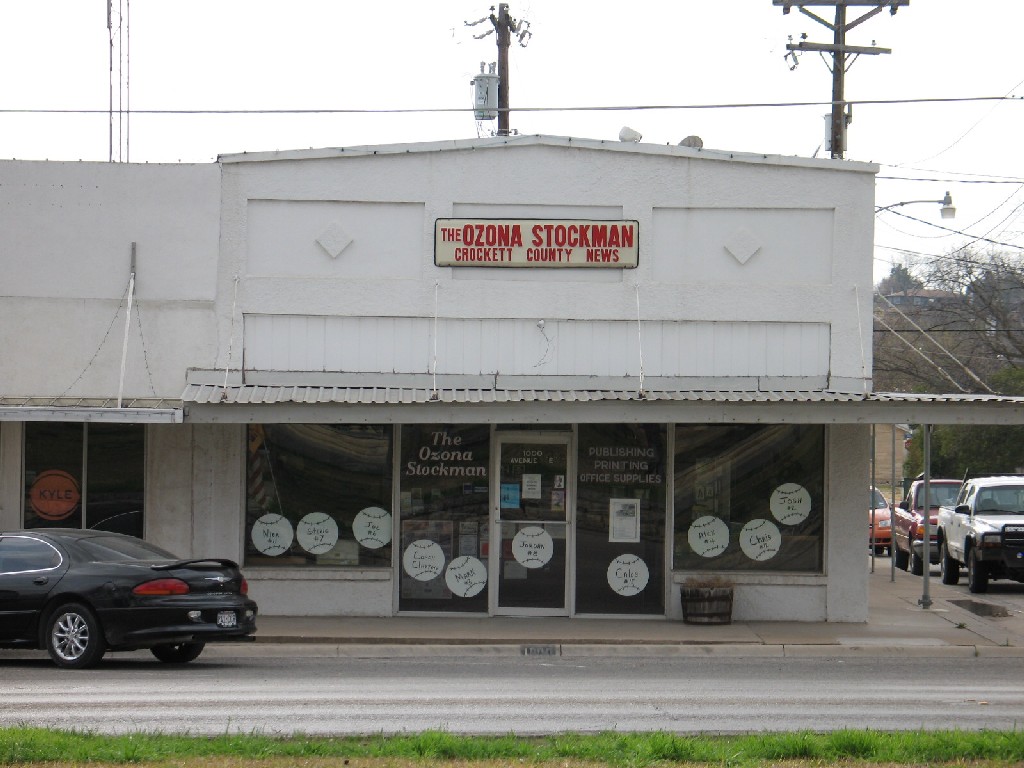
From Ozona's central square, you can see The Ozona Stockman office, home of the local newspaper.


Sunday, March 19, 2006

"Gooooo West . . .

. . . life is peaceful there." Or so the song goes.

I'm counting on that. After 14 years in New Orleans, I'm moving to southern California to take a job with the daily newspaper in San Diego.

My feelings about leaving south Louisiana, the only place I've ever lived, cover a pretty huge spectrum - excitement, sadness, hopefulness, guilt, ambition, sentimentality.

But not uncertainty. Many things have fallen in place to create this opportunity. I have no doubt I'm headed in the right direction at the right time.

I'll miss my family, football games in Tiger Stadium, the smell of coffee roasting outside my front door, Blue Plate mayonnaise, boiled crawfish. I won't miss the piles of garbage still filling the streets, the anxiety of another hurricane season, the hot, humid, miserable summers.

My family (and me taking the picture) enjoying boiled crawfish at DI's Restaurant in Basile, La., over the weekend - quite possibly my last taste of the Cajun delicacy for some time.

We Cajuns have spent centuries leaving our homes and carving out niches in new places. All the while, we've managed to carry in our hearts that special essence - that joie de vivre - that sets us apart from others.

South Louisiana will always be my home. I'll always be a Cajun. I'll be back . . . often.

Sunday, March 05, 2006

Views of the Gulf Coast

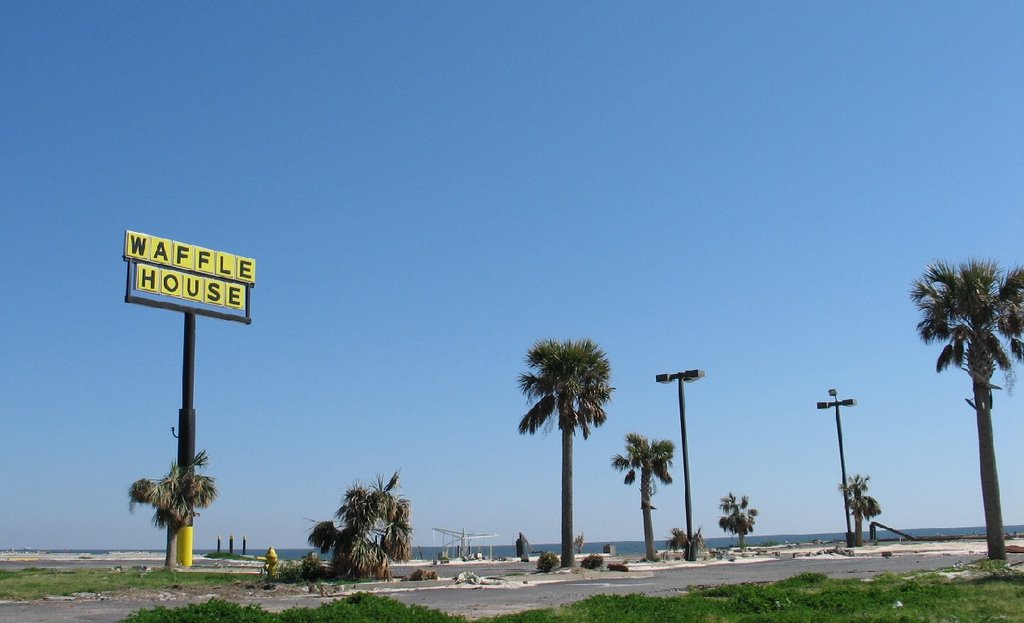
We went to Pensacola last weekend and on the way we drove along the Mississippi Gulf Coast from Waveland to Biloxi. It was my first visit to that area since Katrina struck.

I knew exactly what to expect. I already had viewed tons of pictures of the area. I knew there basically was nothing left for six or eight blocks between the beach and railroad tracks that hug the coast.

Still, when we pulled onto the road that hugs the gulf and I took in the full view, it was devastating. We drove about two blocks and I broke down.

I cried because we were in an area where I spent parts of my summers when I was a kid with my aunts, uncles, cousins and grandmother.

Two of my aunts, who are nuns, belong to an order that had a camp along the beach in Waveland. Each aunt got the camp for two weeks every summer. I would spend the days there fishing off the pier for flounder and checking our crab traps. More often than not, I'd land a small ray or a trash catfish. If I was lucky, I'd find a hermit crab to keep as a pet for a few days.

In the afternoon, when the heat became unbearable, I would nap on a hammock inside a screened front porch. We'd take long walks along the water early in the evening, then eat a big family meal at night.

Some of my best childhood memories with my family come from those trips.

There was no point looking for the camp because nothing - and I mean nothing - was left standing in the area, except for St. Stanislaus School and the adjacent Catholic church, both sturdy brick structures.


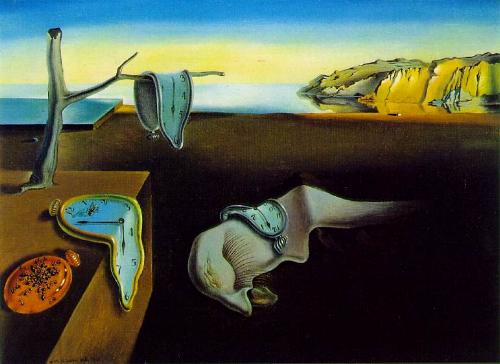
The views along the coast reminded me of that strange Dali painting of a dead tree trunk and melting clocks.

The barrenness of the landscape is actually a good sign. The coast is weeks, if not months, ahead of the New Orleans area in cleaning up storm debris and removing structures that can't be rebuilt.

Tuesday, February 28, 2006

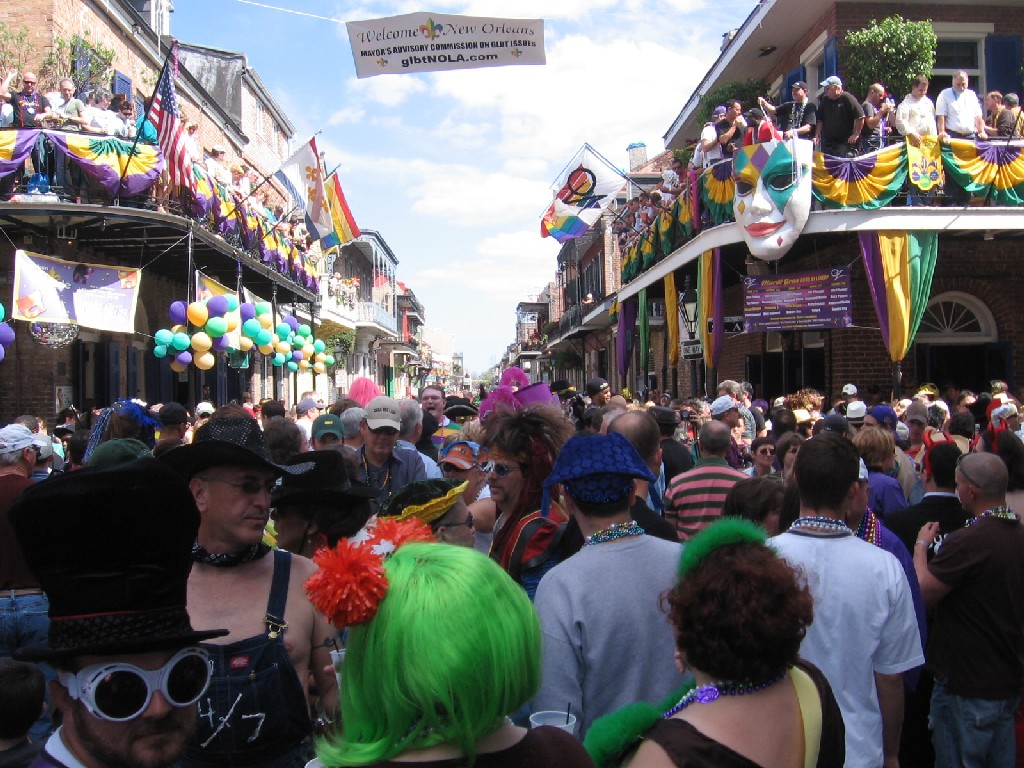
HAPPY MARDI GRAS!

The crowds were smaller and more local than normal for New Orleans' 150th Mardi Gras celebration (even at the corner of Bourbon and St. Ann streets, shown above, site of the Bourbon Street Awards costume contest), but the weather was spectacular and the atmosphere was exuberant for this first Fat Tuesday since Katrina wrecked the city.

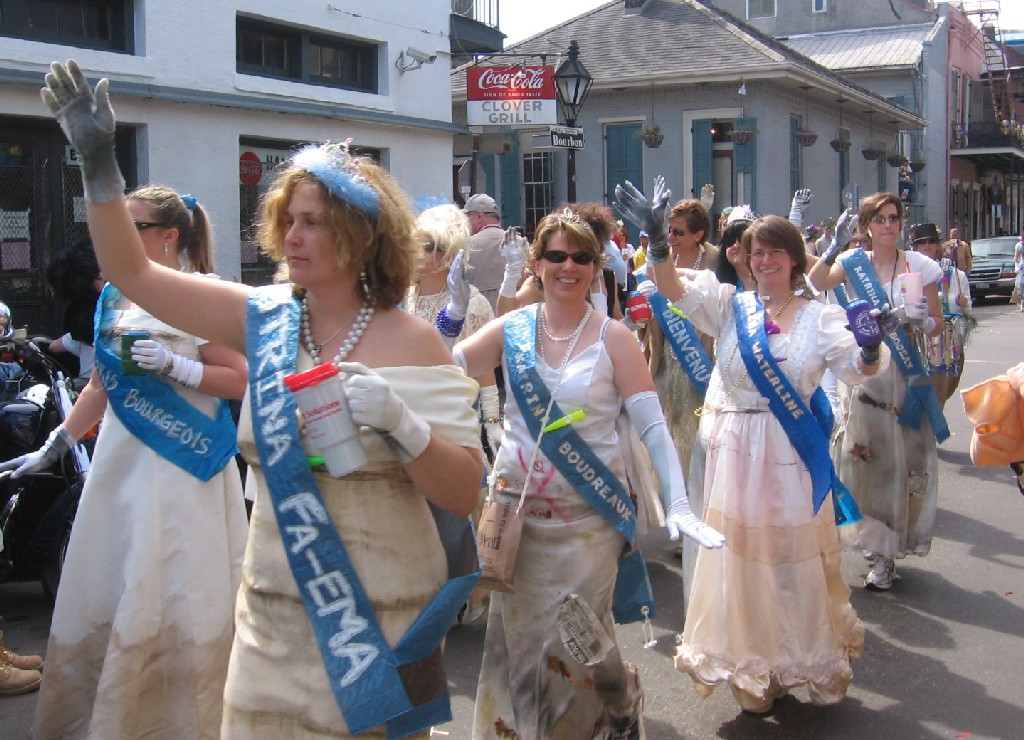
Katrina "debris-taunts" promenaded down Bourbon Street past the Clover Grill and Cafe Lafitte in Exile, one of the oldest gay bars in the city. Normally, this corner would be filled with guys and virtually impassable.

Another difference - none of the gay bars erected the wooden supports normally needed to strengthen overstuffed balconies. No such problems this year.


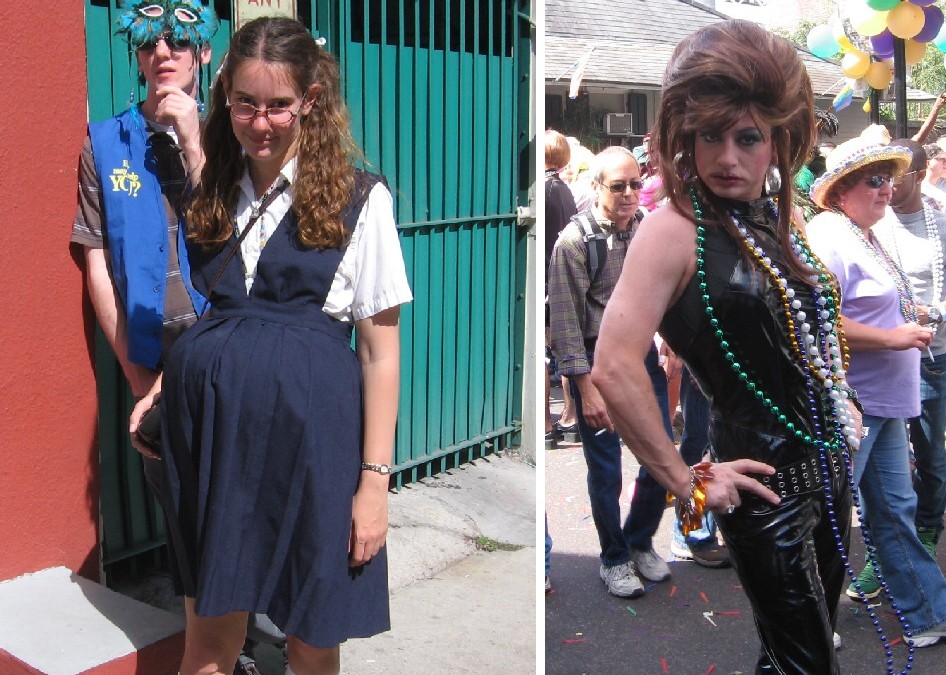
A not-so-innocent Catholic school "girl" (above left) was showing her stuff on Royal Street. Strangely, she claimed to study at Jesuit High School, a local boy's institution. Hmmmmmmm. On Boubon Street a drag queen (above right) modeled her mourning attire.

Even evangelical Christians - or at least the ones who disapprove of seafood - were in town.

Actually, there was little for the real Bible thumpers to thump against. I saw only one woman baring more than her soul, and not once did I see a guy open his fly outside of a bathroom. Nearly everyone was wearing enough clothes to get seated at a decent restaurant.

The day lacked the overt debauchery of past Mardi Gras celebrations, at least in the areas where we walked.

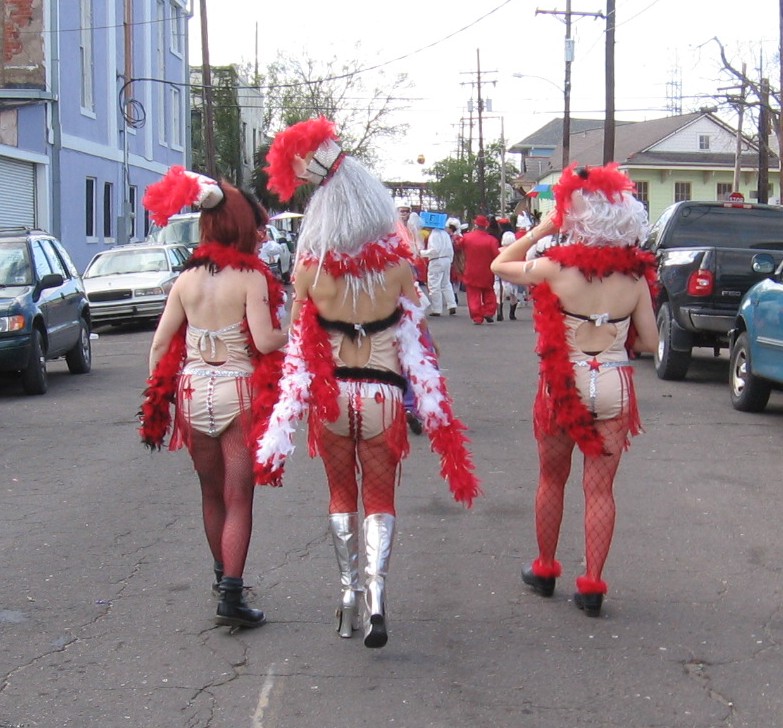
As was expected, many costumes depicted hurricane themes that mainly poked fun at government agencies and officials. Blue roof tarp was the fabric of choice for many.

We ended our day on the second-floor balcony of a friend's house on Royal Street where a Brazilian-styled drum group provided entertainment on the street below.

Sunday, February 26, 2006

Drums outside, must be Mardi Gras

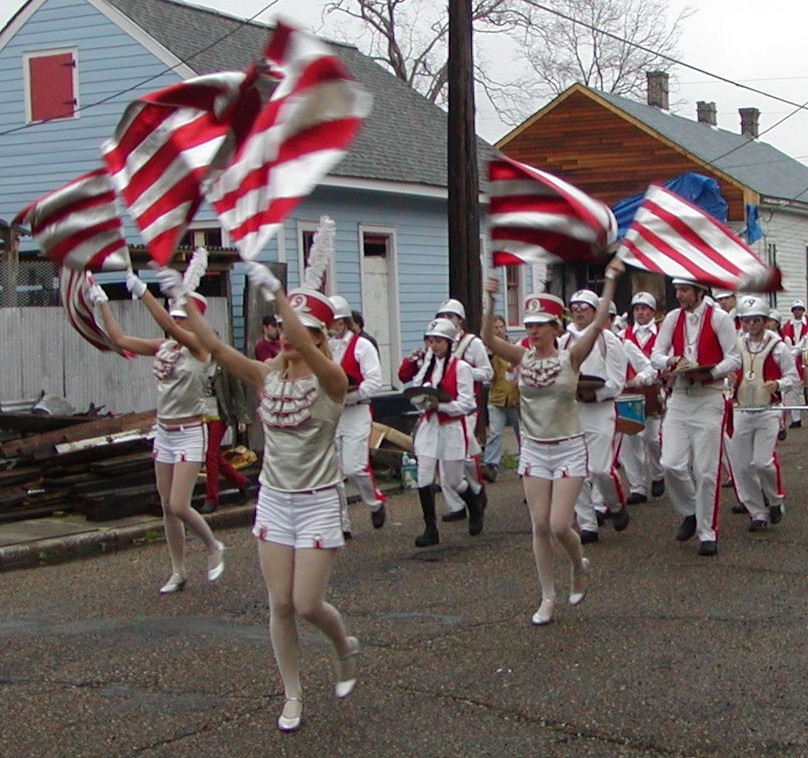
The sound of drums, cymbals and horns brought me and most of my neighbors out of our houses Saturday afternoon as the 9th Ward Marching Band passed down Royal Street in the Bywater.

I'd heard about the band for years, but this was my first chance to see it.

Made up of 65 locals (all adults), the band reflects the eccentric, eclectic and Bohemian nature of the neighborhood.

The 10-year-old group (their web site here) includes such local icons as inventor/organist and band director Mr. Quintron, his puppeteer sidekick and "gun girl" Miss Pussycat and various other members know by such aliases as MC Trachiotomy, Kid Calculator and The Black Dwarf, along with a group of former Rummel High School horn players who add a higher level of credibility to the seemingly haphazard emsemble.

The band's repetoire for Mardi Gras 2006 includes "Love is Like Oxygen," "House of the Rising Sun," and an appropriately timed version of the Scorpion's 80's headbanger classic "Rock You like a Hurricane."

The members managed to rehearse three times a week for the last two months even though many of them were dealing with homes that were destroyed or damaged by Katrina. The group's web site features a photo of Miss Pussycat lovingly drying drenched band uniforms in the back of the group's "lodge" a few days after the storm.

Neighborhood groups such as this one are common for Mardi Gras. It's one of the elements of the celebration that gets missed by most visitors who spend the holiday fighting thick crowds in the French Quarter and along Canal Street.

You can catch the 9th Ward Marching Band on Lundi Gras (Monday) in the Krewe of Proteus parade which rolls Uptown (route map) starting at 5:15 p.m. Watch for the band's "Team Gong" which gets struck only a few times during a parade.

Thursday, February 23, 2006

Breakfast with the T.P.

It's the little things in life that make a difference.

For the first time in six months I opened my front door and found the latest edition of The Times-Picayune waiting for me. The last time I did that was on the Sunday morning before Hurricane Katrina made land fall.

This might sound strange coming from someone who works at the T.P., but I haven't read much of the newspaper since the storm. I typically haven't seen the paper until I get to work and, once there, I only have time to scan the front pages of the sections. By the time I get home at night, I'm tired and busy with other things.

Like all other businesses in the city, the T.P. has had a big problem replacing the newspaper delivery people who didn't return after the storm.

Wednesday, February 22, 2006

Prime time disaster tours from the comfort of your couch

So you've been wanting to see the worst of the devastated neighborhoods in New Orleans but haven't had enough time or energy to venture beyond the couch in your living room.

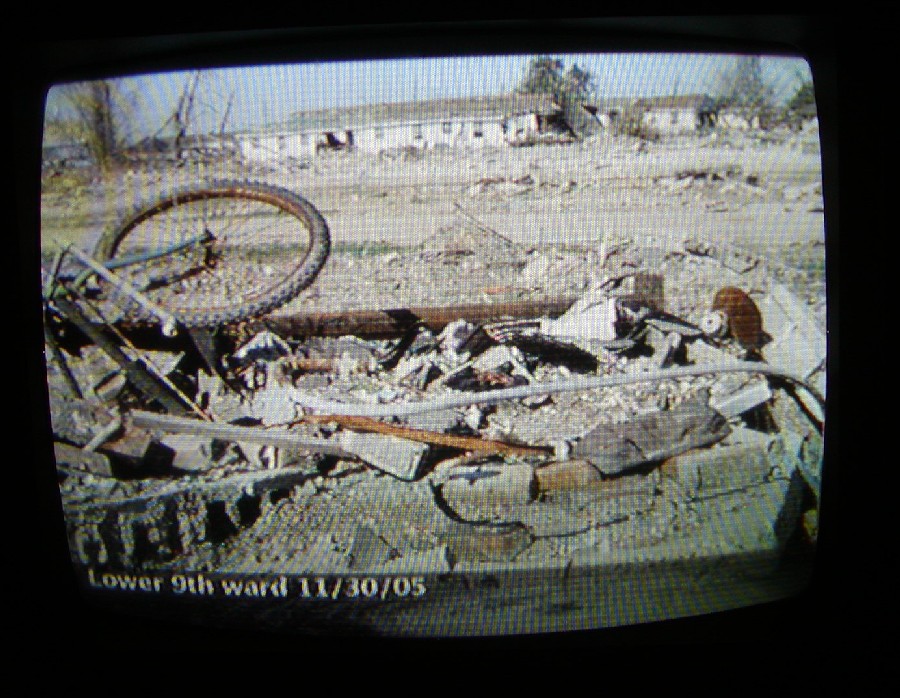
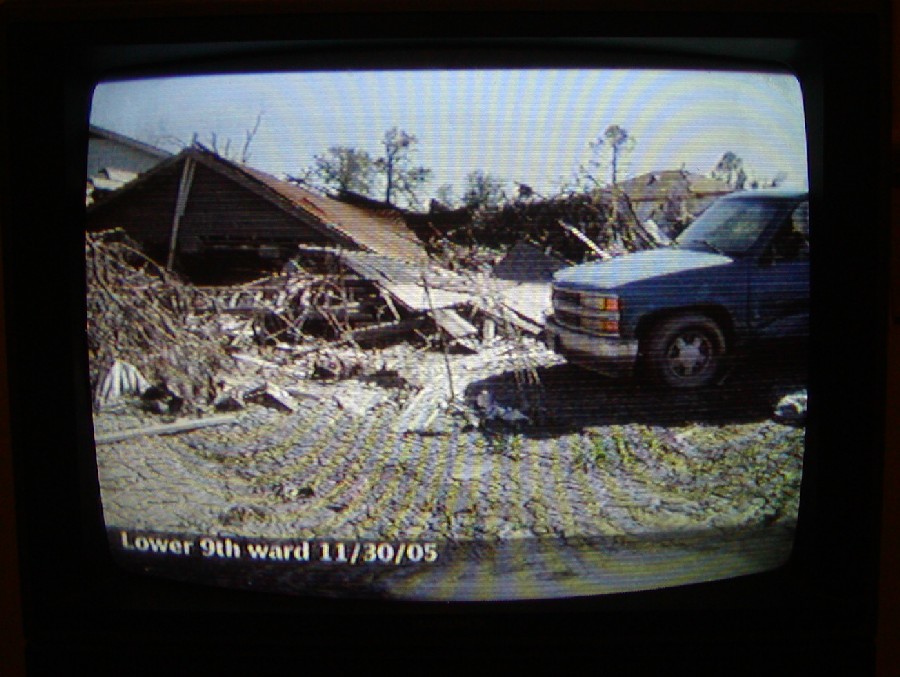
No problem. The local cable television company is broadcasting still-image slide shows for hours at a time on several local access channels. No kidding.

For those who don't believe me, I've posted images that I took from the channels.

I still haven't figured out what kind of person would sit in front of a TV and watch hour after hour of pictures of wrecked, flooded houses and streets.

Then again, who am I to judge. Many of my friends think I'm pretty weird for watching the Weather Channel like other people watch CNN.

Mardi Gras arrives in the Bywater

I was drawn out my front door late this afternoon by the sounds of drums, horns and cheers from a walking krewe that was passing along Royal Street.

The group, numbering about 100, rounded the corner and stopped at Elizabeth's, a well known neighborhood restaurant.

It looked like one of the many groups that merge on Mardi Gras morning to form the Society of St. Ann, a large eccentric walking krewe that spends much of the day marching from the Bywater to the foot of Canal Street where they toss sentimental items into the Mississippi River for some unexplained reason.

The woman pictured below happily posed for me in front of my house. "A drag queen once told me that you should always open your mouth when being photographed because it makes you look as though you're having fun," she said.

Saturday, February 11, 2006

Laissez les bon temps roulez!

Like it or not, Carnival season is off and running in the Disaster Zone.

The Krewe du Vieux rolled through the Faubourg Marigny and French Quarter neighborhoods Saturday night in its traditional position as the first parade of Carnival season.

At least 59 parades will take to the streets of the metro area between now and Mardi Gras (on Feb. 28) during an abreviated parade schedule. This year's Carnival marks the 150th celebration of Mardi Gras in New Orleans and the first one since Katrina destroyed and emptied much of the city.

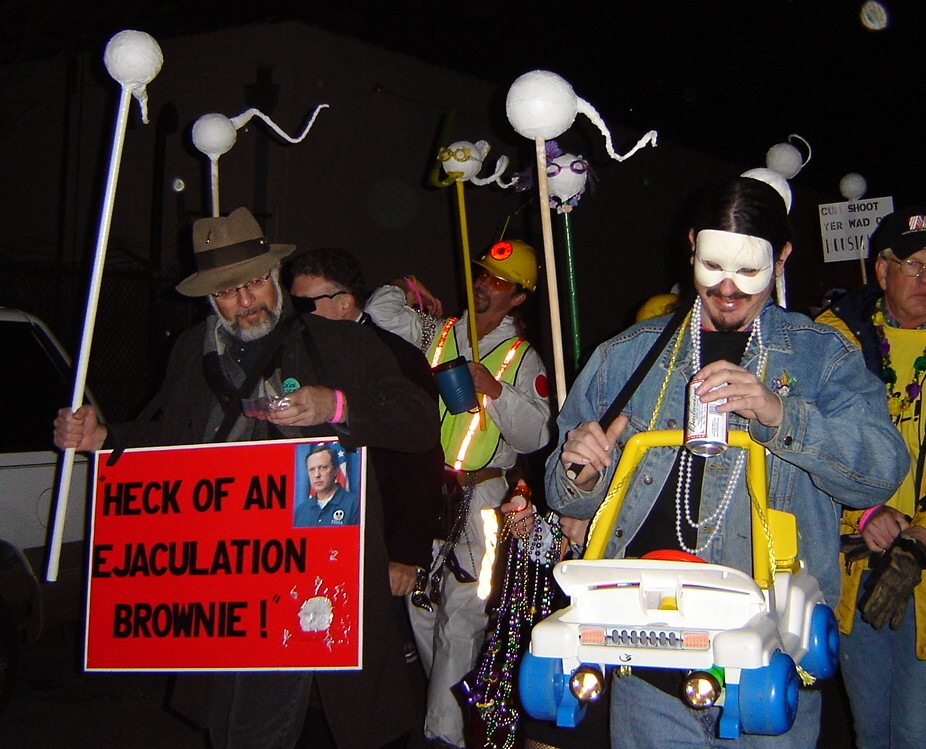
Known for bawdy and often blistering satire of politicos and culture, Krewe du Vieux members had no trouble finding targets for their lampooning just five and a half months after the hurricane.

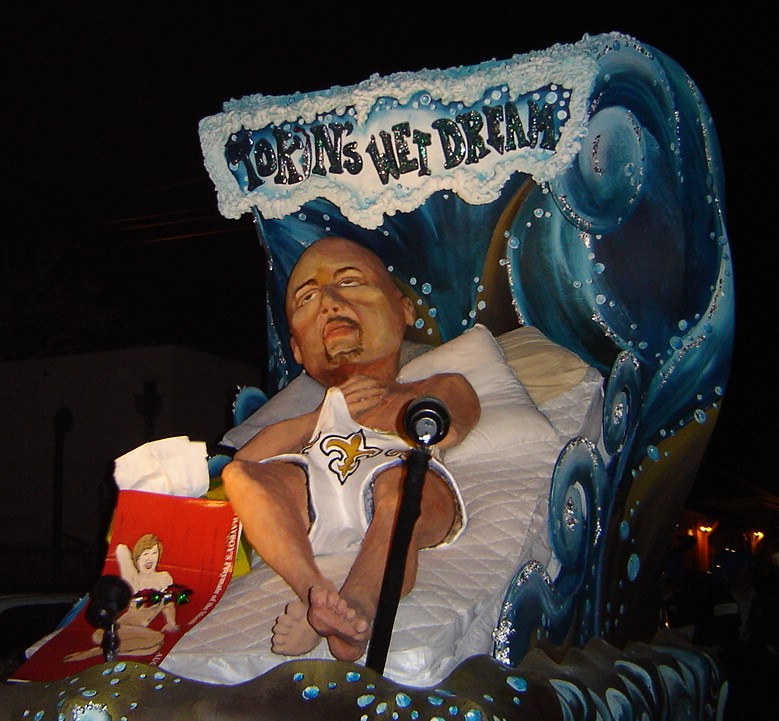
Many of the floats made bedfellows (sometimes literally) of New Orleans Mayor Ray Nagin, Louisiana Gov. Kathleen Blanco and former FEMA chief Michael Brown.

Marchers wore costumes made to resemble blue roof tarps and discarded refrigerators, and passed out leaflets promising late deliveries of Mardi Gras beads from FEMA. They also took jabs at the Army Corps of Engineers - or Comatose Corps of Engineers - and the U.S. Postal Service, which still hasn't delivered any of my mail from the first month after the storm. Conspicuously missing from the targets was President Bush.

Bringing up the rear of the parade was perhaps the lewdest of all the floats (above). Titled "Mandatory Ejaculation," the float was followed by an army of sperm-toting marchers.

Photo credits go to Rex.

Saturday, February 04, 2006

From palms to pines

Drive an hour or so east of San Diego and you find yourself in the middle of the Laguna Mountains, a range of peaks around 6,000 feet tall that divide San Diego County's populated western side from the vast, mostly empty desert to the east.

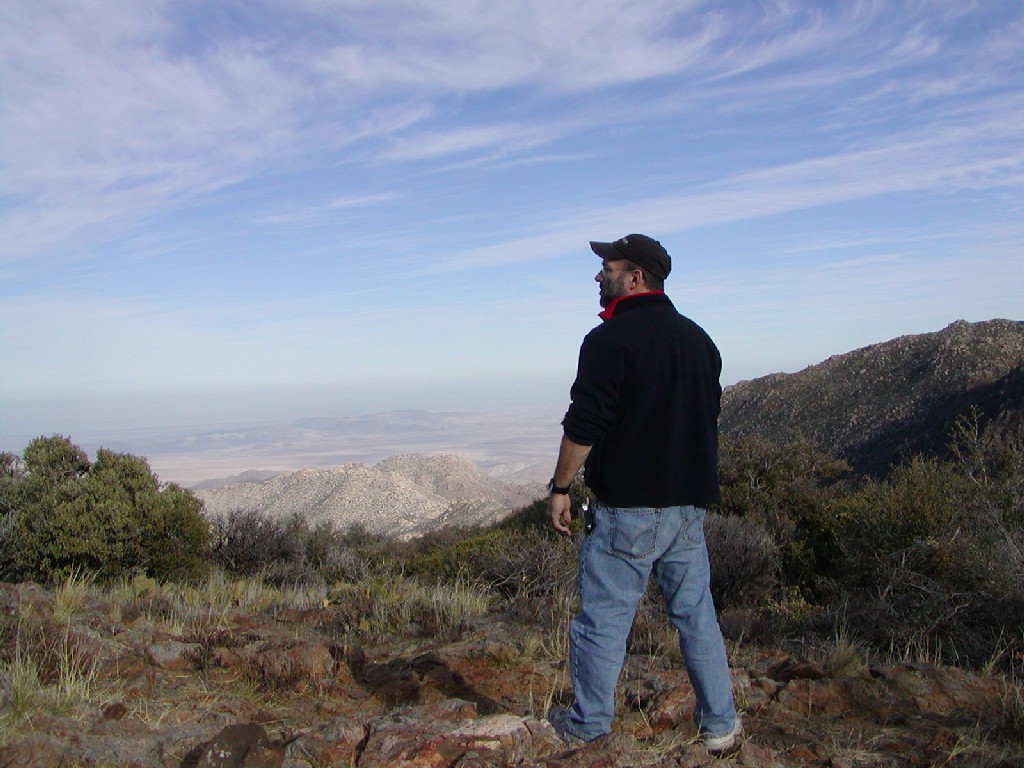
We spent Saturday hiking an easy trail on Mount Laguna (el. 5,975) with great panoramic views of distant ranges, the Anza Borrego Desert and the Salton Sea, a large saltwater lake lying 235 feet below sea level.

Though snow is possible this time of year in the area, we didn't see any. The temperature peaked in the low 60s.

We didn't see much wildlife either, only a flock of what looked to be road runners that scurried across our trail about 30 yards ahead of us and disappeared in the brush.

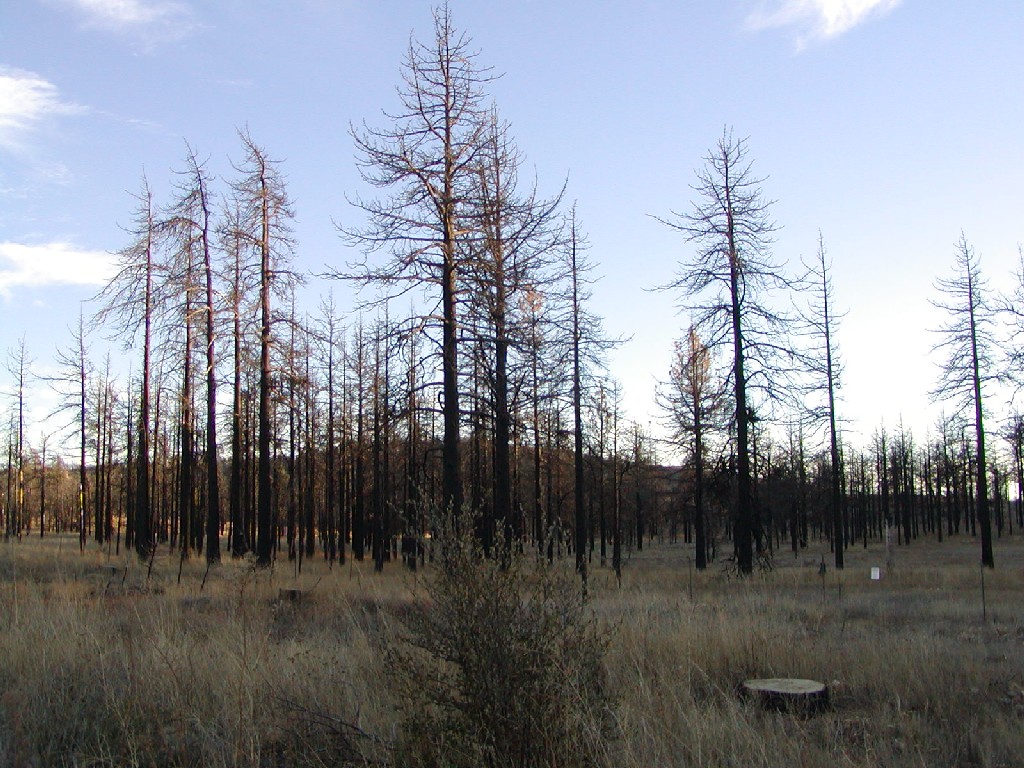
On our way back to San Diego we circled Lake Cuyamaca, a popular fishing area sitting at the foot of Stonewall Mountain. The entire area was scorched in October 2003 by wildfires that burned across much of the county and came within seven miles of Rex's house in San Diego's urban core.

More than two years later, many people in communities off Interstate 8 east of the city still live in trailers (just like the ones popping up in New Orleans' flood zone) as they slowly rebuild their homes. And miles upon miles of charred, dead trees still stand as grim reminders of the destructive forces of nature.

Friday, February 03, 2006

Crossing la linea

We ventured south of the border to Tijuana (pronounced tee-whana for those of you inclined to slip an extra "a" into the first syllable) for my first trip to Mexico.

First we strolled through the tourist district which starts at the border crossing.

The area includes a metal arch that is held in place by several dozen cables near the entrance to Plaza Santa Cecilia, a block-long pedestrian street with four gay bars and a gay restaurant.

Then we walked several miles around the central parts of the city before heading back to the border and waiting in line for more than an hour to re-enter the United States (see the bottom picture of the traffic jam on the Mexican side of the border crossing).

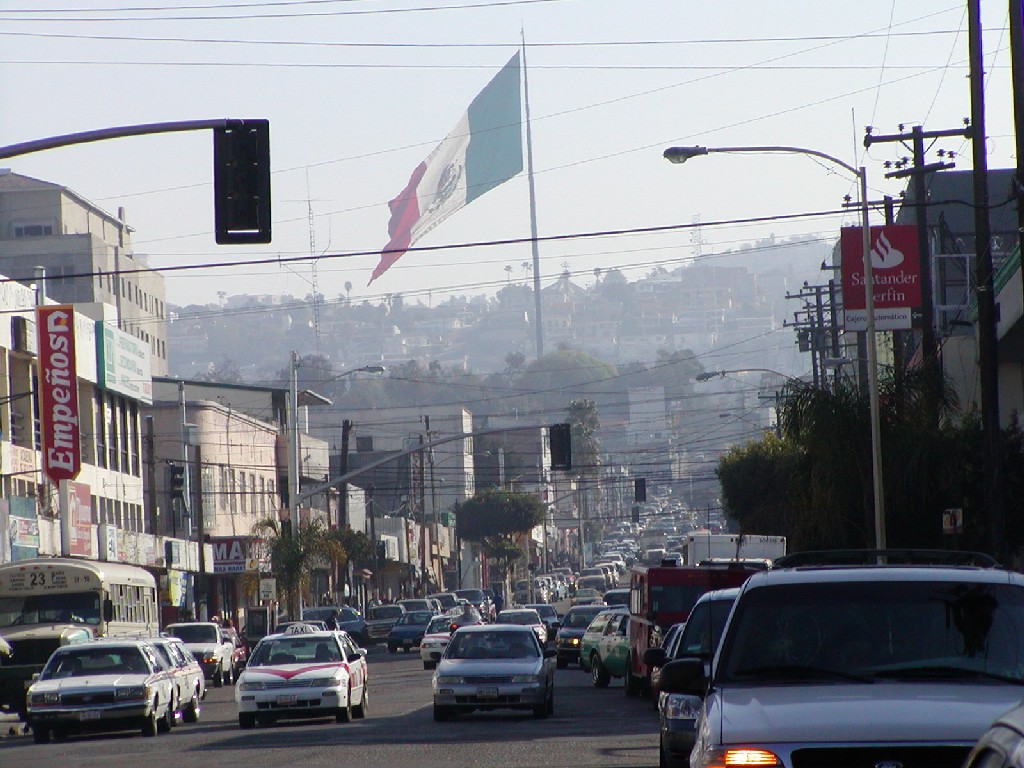
The city is huge with a guestimated population of 2 million. The center sits in a river valley surrounded by hills that are covered with densely packed neighborhoods stretching far beyond the visible ridges.

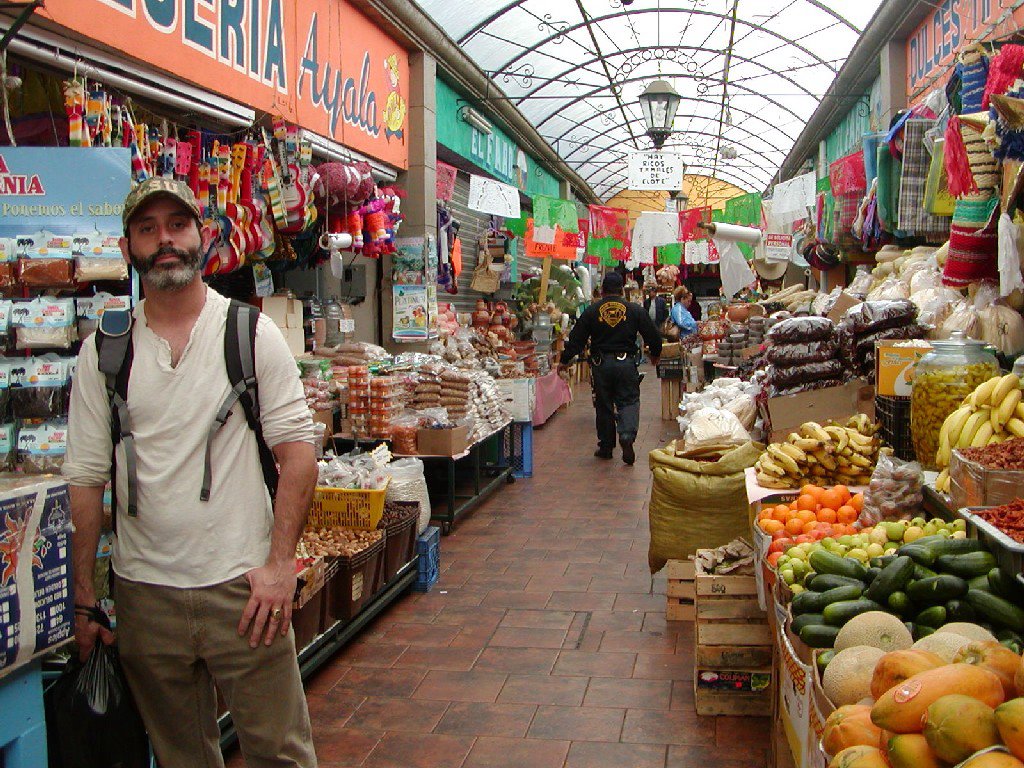
Most people we encountered spoke English, or at least enough to try to sell us something. While inside the tourist district we were constantly haggled by shopkeepers, but we were largely left alone in other areas.

Rex says that most Americans never venture beyond Avenida Revolución, the main tourist shopping street akin to Canal Street in New Orleans. That's unfortunate. If they did, they would quickly discover how similar Tijuana is to many cities north of the border, or at least the older ones east of the Mississippi River.

We visited a couple of shopping malls not far from city's federally subsidized cultural center (CECUT, pictured below) that were crawling with trendily dressed teens and middle- and upper-class adults.

In fact, I felt a striking sense of familiarity in Tijuana. Many things reminded me of New Orleans. It's a city that wears its problems on its sleeve. Poverty is almost always within view. The streets are a little dirty and most of the buildings (including City Hall) could use a good pressure washing.

It's also a city clearly with culture and personality - the kind of depth and complexity that's wanting in many places north of "la linea."

I can't wait to go back and explore some more.

Thursday, February 02, 2006

Walking the line

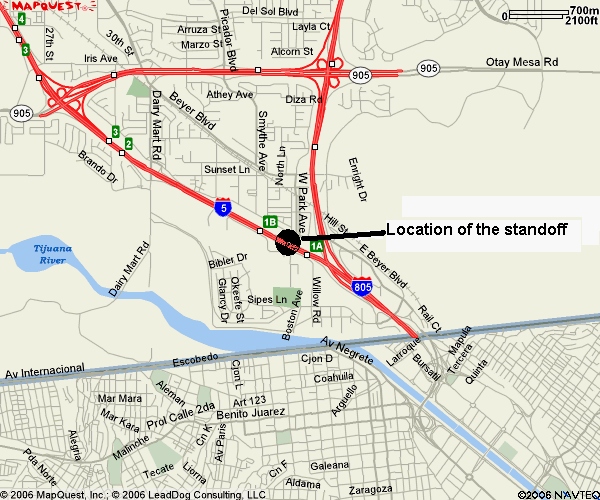
We were heading back to San Diego on Interstate 5 about three miles north of the Mexican border when the flashing red and blue lights appeared behind the car. We pulled over wondering what was up.

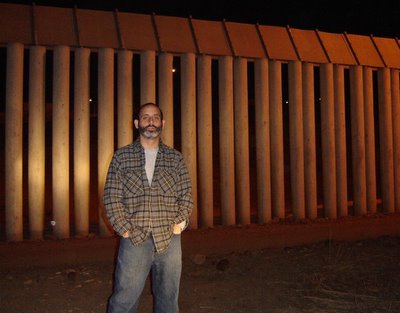
Minute earlier we had driven to The Fence, the hulking steel and concrete barrier that was constructed over the last decade to keep illegal immigrants from entering the United States. We followed a two-lane road right up to structure, parked the car and took pictures in front of it.

Rex had mentioned several times that we might raise the interest of Border Patrol officers in the area, but several B.P. vehicles had passed us without hitting their brakes.

Ten minutes later we were headed back to San Diego when the Border Patrol officer flipped on his strobes behind us.
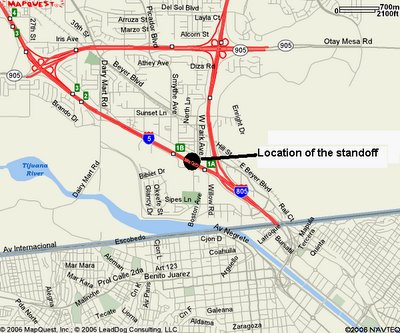
The officer asked Rex where we had been. "We went to The Fence," Rex replied. "What were you doing there?" the officer asked. "Taking pictures," Rex said. By the time he asked for our ID's Rex had had enough.

"Why have you pulled us over? Have we done anything wrong?" Rex demanded.

The officer tried to remain polite, saying 15 aliens had tried to enter the country through a tube below The Fence in the very area we had been taking pictures and that he was just making sure we weren't Mexicans.

Rex continued to protest. Was the stop legal? Weren't we obviously legal U.S. citizens? Hadn't the officer already run a check on our license plate?

The officer started getting pissed, insisting he had every right to pull us over under some 1950's immigration law.

It was, quite literally, a Mexican standoff.

The officer was determined to check our ID's, if for nothing else but to prove that he hadn't done anything wrong. And Rex was determined to thwart him, if for nothing else but to prove a point.

Meanwhile, I was on the verge of a conniption.

In my part of the world (as our president loves to say of New Orleans) you don't question cops about anything, and if you do it could cost you a ton in ticket fines, a punch in the stomach, a whack across the head or maybe even a bullet in the chest.

I was imagining the two of us splayed across the hood of the car with a gun pointed at us.
Instead, cooler heads prevailed. Rex and I turned over our ID's. The officer gave them an cursory glance. Then he wished us a pleasant night as he handed them back.